As today is the first official day of autumn, I am happy to report that my summer selection for my Road of Rereading project was finished up last night.
John Steinbeck's East of Eden is a wonderful book to explore for both the first and any number of times, but it can lag a bit towards the end there. Nonetheless, considering that it was a late in the game switch(due to personal circumstances, Daniel Deronda was just too taxing for me to tackle again), I did pretty well with EOE.
The book is truly Steinbeck's saga story, as a bit of his family background is mixed into this novel of multi generational families, one of which happens to be Steinbeck's own ancestors in Salinas Valley,California, the main setting for the Trasks and the Hamiltons. While Steinbeck's people(the Hamilton family) do get more than a fair share of the narrative, the central focus of the ongoing plot are the Trasks, starting with Adam and Charles, a pair of brothers who at times unknowingly or unwillingly compete for the love of their gruff yet emotionally distant father.
Like any good saga, the story features love, hate and a slew of characters who represent one or the other yet at times can be both. It can be daunting to keep track, as the narrative does switch from one set of people to the other at different points, but there are plenty of standout figures in EOE that mark particular paths that the reader needs to follow:
One of those standouts is a sinister one; Cathy, the cold blooded beauty who has no qualms about manipulating anyone around,especially men. She first latches onto Adam as a means of recovery from a violent attack but is quick to see that his brother Charles is more like her than either of them care to admit.
In modern terms, Cathy is a sociopath as her reluctance to use and abuse others is so low it's practically nonexistent. From murder to attempted murder(she shoots Adam non fatally in order to escape becoming a standard wife and mother), along with prostitution and blackmail, there's no doubt about which color hat she's wearing here.
Yes, she does show a touch of emotion later on in the book when her teen age son Cal approaches her, although it's not quite the warm hearted family reunion there. One consistent trait of Cathy's is that she has to be control of any situation at all times and appear cool and calculating yet alluring all at the same time. It's no easy trick to be sure but you can't help admiring her evil ways there. In a way, this Cathy reminds me of another notorious Catherine, the deadly diva of the 90's thriller Basic Instinct, who played very similar mind games with the men unfortunate enough to be caught in her path of destruction:
The character that really stood out the most for me here was Lee, the Chinese American servant of the Trask family who becomes their conscience and steady influence over time.
When we're first introduced to him, he appears to be a stereotypical figure, complete with pidgin speech, but it's not long before Lee reveals that he puts on that expected persona in order to be "listened" to by anyone, particularly white society. Over time, he drops that charade yet is still underestimated by many who cross his path. His input into the lives of this family that pretty much becomes his own is vital to the story as well as to most of the long term characters.
His backstory is a riveting tale of immigration and tragedy that is just as compelling as any of the main characters and it's a credit to Steinbeck's talent that he was willing and able to give what could have been a cliched supporting player into such a vibrant personality whose emotional journey is as equally engaging as that of the main characters.
The core of East Of Eden is sibling rivalry, based upon the biblical Cain and Abel story, and it's a theme that seems to never go out of style. Sometimes, it's friends who are like brothers who find themselves at odds with each other and most times, a woman is put between them as the source of contention, such as Abra in this book, but it's never really about the girl, now, is it?
More often than not, the real reason is that "mom/dad liked you best!" and whether or not, that's the actual case in fact, such jealousy is insidious and almost addictive.
Fictional females engage in this trope, too, but the whole "brother vs. brother" set-up is a persistent one, from sitcoms like Everybody Loves Raymond and Frasier to dramas with a paranormal flair like Supernatural and The Vampire Diaries. The EOE comparisons do come to mind especially when it comes to vampire siblings Stefan and Damon of TVD, whose eternal feud was sparked by a cruel Catherine but was flammable to begin with due to who their strict father preferred as a son-sound familiar?:
Well, as enjoyable as it has been to walk down this section of the rereading road with Steinbeck, I am happy to be done with this book and look forward to starting my fall selection, Little Women by Louisa May Alcott, sometime soon.
Since I have a couple of other reading challenges to complete(one of which I will be talking about later this week), the March sisters may have to wait until late October or early November for me to rejoin them.
In the meanwhile, there will be a write-up regarding the film adaptations of EOE coming soon to LRG, so do keep an eye out for it. East of Eden may not seem like a soap opera saga but it's just as juicy as any nighttime drama, only with a little more food for thought being served up with story telling style:
With October fast approaching, the time to sign up for the Seasons of Reading Frightfall Read-A-Thon is at hand. The guidelines are pretty simple, all you have to do is choose at least one scary book to read and discuss during October 5 and 11.
You can, of course, read more than one but I tend to narrow my focus here, due to the many TBR piles that I tackle(not to mention a special fall reading list that I put myself on).
Like I've done before with these readathons, I am going to reread a book that I haven't touched for quite a long time. I was thinking of borrowing a newer one but that might not work out for the time period in question here, besides any excuse to reread a book is a good one, in my opinion.
So, my pick for this Frightfall event is Stephen King's Misery, the
1987 thriller about a commercially successful writer who longs to be
taken seriously and one of his Constant Readers who is deadly serious
about him staying true to the stories she loves.
The book has been on my mind lately, as a Broadway production is about
to begin a limited run on stage. The script has been adapted to the
stage by William Goldman(who also wrote the screenplay for the 1990 film
version) and stars Bruce Willis and Laurie Metcalf. While I'm not able
to see the play, it does sound like a smart idea to turn this particular
King story into one:
I remember when I first read the book, how very stage bound it seem and I mean that in a good way. One of my reading kicks in my youth was reading plays and the limited setting of Misery, along with the two character struggle for control that makes up the story, felt like it could be easily adapted for the theater.
The movie version does aid the casting for the play, as Bruce Willis can be seen as a likely candidate as Paul Sheldon due to James Caan, who originated the cinematic role, being a similar type of actor. The pressure will on strongly on Laurie Metcalf, however, as fellow stage dynamo Kathy Bates won an Oscar for her fearsome role as Annie Wilkes, the ultimate "Number One Fan":
Misery was seen as change of pace for King, as the fear factor here didn't come from a supernatural force or paranormal ability gone wild. The terror was simply a woman gone way over the edge, channeling her mental turmoil into a deluded love of a fictional character and it's creator.
You could see this as a slam against escapist fare but I really don't think that was the point trying to be made. King was channeling his own issues about fame, writing and overzealous fans,some of whom he ran into along the way.
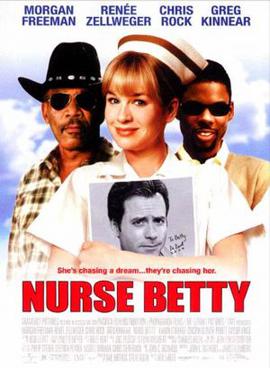
I will be looking at some of that as I reread the book, along with the nature of celebrity fixation that borders on the dangerous there in fiction and film. Folks obsessing over the faces they see on TV, films and nowadays online have become an instant go-to for either the horror or thriller genre, sometimes even veering into dark comedy such as the 2000 movie Nurse Betty did, with it's heroine burying the shock of witnessing her husband's murder by willing herself into a character on her favorite soap opera:
That might turn into a whole other discussion but in the mean while, I do look forward to Misery. Annie Wilkes has become one of our most memorable modern day villains, the kind that gets quoted for such lines as "He didn't get out of the cockadoodie car!" and is on the AFI list of iconic cinematic menaces.
Her everyday nature is what is truly chilling, as her cheerful attitude hides a multitude of hideous thoughts and actions. You might run into someone like her in the supermarket or at your local book club, never suspecting the dark side of her soul.
If the story was told from her point of view, she would no doubt frame her time with the captive Paul Sheldon as a romance novel come to life, one that wouldn't exactly end like a Hallmark channel type of happily ever after movie. No, it would be more suited to Lifetime, a channel that Annie would probably shun, preferring her own take on true love as terrifying as that would be:
With the dawn of this new century, Jane Austen readers have had the pleasure of celebrating the anniversaries of her works, the latest one to be Emma, which was first published between 1815-16.
Considered by many to be her masterpiece and only second to Pride and Prejudice in the affections of Austen fans, this book has received it's fair share of multimedia attention from film adaptations, re-imagined novels, modern updates(including the recent Emmy winning web series, Emma Approved) and even comic book versions of her story as well.
Emma Woodhouse is as her author describes her at times, "a heroine that no one will like,except for myself" yet her innate charms are hard to resist. While Emma's schemes for the happiness of others and her misjudgement regarding certain hidden plots around her do cause some trouble, her inner guide towards better behavior does assert itself to make things right for all concerned(with the help of her best critic and even better friend Mr. Knightley).
As part of this literary celebration, Penguin Classics is releasing a special deluxe edition of Emma on September 29, with amazing cover art by artist Dadu Shin and edited with an introduction by Juliette Wells, an associate professor and chair of the English department at Goucher College.
Ms. Wells is a member of the Jane Austen Society of North America(JASNA) and an editorial board member of their journal, Persuasions. She is also the author of Everybody's Jane: Austen in the Popular Imagination along with other works and in this interview provided by the publisher(both the questions and the answers were sent to me), she talks about the creation of this new annotated edition as well as her favorite adaptations of Jane Austen's work and recommendations for future Austen themed reading:
A conversation with JULIETTE WELLS, Editor and Introducer of EMMA: 200th-Anniversary Annotated Edition
When we celebrate the 200th anniversary of EMMA, what in particular are we celebrating? What’s new about this edition?
We’re celebrating the 200th anniversary of Emma’s
original publication, in London in December, 1815. The date of
publication is a little confusing because “1816” was printed on the
title page of the first edition of the novel, but it was
actually released in December, 1815. I think this gives us the right
to celebrate for a whole year!
And what better way to celebrate than to re-read Emma, or read it for the first time? Our 200th-anniversary
annotated edition has everything you need, all in one place, to help
you appreciate this wonderful novel. You can immerse yourself
in Austen’s world and also have, right at your fingertips, explanations
of some of the elements of the novel that tend to trip up or puzzle
today’s readers.
In the Austen canon, what would you say makes EMMA special and unique?
Emma is special because it’s the capstone of Austen’s career as an author. She had already published three novels (Sense and Sensibility,
Pride and Prejudice, and Mansfield Park), and she was at the very top of her game as a writer. She didn’t know it, of course, but
Emma would be the last book she saw through to publication.
When
Austen died in July 1817, she left two essentially completed novels (Northanger Abbey
and Persuasion), which her brother published at the end of that year. So
Emma is the last Austen novel that was published in the exact form that she herself approved.
Emma is also special because it’s the most
perfect example of Austen’s particular genius as an author, which is (I
think) to create a recognizable, engaging fictional world from the
slenderest of materials. She writes about everyday
life and ordinary people—you won’t find kings and queens in her novels,
or ghosts or vampires. Her effects are wonderfully subtle.
What
was the publishing process like when EMMA was first published? How was
the novel received critically? Was Austen as popular in her own day as
she is today?
The publishing process was recognizable in some
ways and very different in others. Austen didn’t have a literary agent;
at that time, authors dealt directly with publishers. With
Emma, she chose a new, more prestigious publisher—John
Murray—than she had used for her three earlier novels, and she
negotiated hard for a good contract with him. As authors are today,
Austen was responsible for proofreading and approving copy before
publication.
Since being a published author was considered not so
respectable for an unmarried woman, Austen chose to remain anonymous on
her title pages throughout her lifetime.
Emma identifies her as “the author of Pride and Prejudice.” Her identity wasn’t made publicly known until after her death.
Like Austen’s earlier novels, Emma was praised by
reviewers, who appreciated Austen’s ability to convey a very realistic
fictional world. Austen wasn’t a bestseller in her day; then as now,
thrillers, adventure stories, and romances
outsold quiet literary fiction. But Austen did have the satisfaction
of knowing, in her lifetime, that readers appreciated her work. In
addition to reading reviews, she kept track of the responses of her
friends and family, which offer a wonderful glimpse
into what everyday readers of Austen’s own time thought of Emma. Some of what they liked and didn’t like may be very familiar to us!
One of your specialties as a professor of English is how Jane Austen’s work continues to appeal to people, how
it remains at the forefront of pop culture conversation. Last year,
Alexander McCall Smith updated EMMA, “Pride and Prejudice and Zombies”
hits
the big screen in 2016, and movie and TV versions of Austen continue to
draw viewers.
Why do you think we keep updating and adapting Austen?
What are your favorite adaptations or updates, and what makes them
successful?
Austen really is endlessly adaptable, much like
Shakespeare! You can transpose her stories and her characters to other
places and times, and they still work. My own favorite creation
inspired by Austen is Amy Heckerling’s
Clueless, from 1995. Clueless is a joy to experience, and smart too, much like an Austen novel:
I’m also a big fan of Sense and Sensibility, also
from 1995, for which Emma Thompson wrote the screenplay. Experiencing
Austen through the eyes of a witty, thoughtful contemporary woman—it
doesn’t get any better than that!
I like Karen
Joy Fowler’s novel The Jane Austen Book Club,
from 2004, for the same reason—an experienced writer chooses to think
about how Austen’s works matter to us today, and takes us along for the
ride:
Lost in Austen, the British miniseries from 2008, is also a big favorite of mine. A rabid Austen fan finds her way into the world of
Pride and Prejudice and
messes it up. It’s a hoot to see the Austen characters we know so well
doing and saying things that they NEVER would have done or said in the
original novel.
I think TV and movie adaptations of Austen are so
popular for two main reasons. They’re beautiful to watch, no question.
And they offer a respite—which a lot of people of all ages value—from
the loud, fast, scary, stuff that much of mainstream
entertainment is these days.
The tricky part comes, sometimes, when
someone knows and loves Austen through the films and then goes to pick
up one of the novels, only to discover that the reading experience is a
lot more complex and challenging than the viewing
experience. I had those first-time readers of Austen very much in mind
when creating this new edition of
Emma.
What
is it like to prepare a new edition of a book that’s so well-known and
exists in many editions? What kind of research did you do? Did anything
you learned during the process surprise you?
It was really important to me to create a truly new approach to
Emma—a welcoming, reader-friendly approach. Excellent editions of Emma
already exist for scholars and for devoted “Janeites.” With this
anniversary edition, I wanted to open Austen up to people who hadn’t
given her a try before, and to support
their reading experience by using everything I know from years of
teaching undergraduates and from talking with everyday readers.
I
certainly reached for plenty of scholarly and reference sources on my
shelves, but I’d say my most important preparation was
to have built up, over time, a sense of what readers are curious about
and what frustrates them in their first encounter with an Austen novel.
And, through my teaching, I’ve had a lot of practice at explaining
historical concepts in an accessible way.
I also had the huge pleasure of re-reading Emma myself, slowly,
with pencil in hand, making lists of topics to cover in my contextual
essays and marking words that would likely be unfamiliar to present-day
Americans.
By doing this, I developed a much
deeper appreciation of Austen’s artistry with words. This surprised
and delighted me—I would have said I appreciated her artistry plenty
before! But it wasn’t until I was trying to figure out how to convey
the meaning of a particular phrase that I realized
how much meaning she packs in with her clever, economical word
choices.
Thinking about readers’ experience with Emma also shaped how the
contextual material is presented in this new edition. In my experience,
many ordinary readers, and even college students too, are put off by
footnotes, or at best ignore them.
So we decided
instead to group topics together in contextual essays, which are
easier—and, I hope, more fun—to read. Here too my experience explaining
historical concepts And, there’s no question, the gorgeous cover by
Dadu Shin is a beautiful invitation to pick up this
Emma!
The illustrations for this edition are drawn from historical copies of Emma in
the Jane Austen Collection at Goucher College, where you teach. Can
you tell us more about that collection? What is it, exactly?
The Jane Austen Collection at Goucher College in
Baltimore, Maryland began as the passion project of an alumna of the
college from the 1920s, Alberta Hirshheimer Burke. Alberta loved, loved,
loved Jane Austen’s writings and decided that
her own purpose in life was to gather as much material as possible
relating to Austen.
So Alberta bought first and rare editions and even
some manuscripts—such as letters in Austen’s handwriting—all of which
she felt brought her closer to her beloved author.
The images in our new edition reproduce turn-of-the-twentieth century
illustrations of
Emma by English and American artists, from books that Alberta
owned, and which she bequeathed to her alma mater when she died in
1975. (Her manuscripts went to the Pierpont Morgan Library in New
York.)
Alberta also cared deeply about ephemera with an Austen
connection, such as newspaper and magazine articles, which she preserved
in ten overstuffed scrapbooks. So our Austen Collection at Goucher is a
terrific resource for popular culture studies
as well as book history.
As
a college professor, what’s your favorite aspect of teaching Austen? Do
you face any challenges in interesting students in her writings?
Absolutely the best part of teaching Austen is that so many students are
enthusiastic about studying her writings. She is an easy sell!
Shakespeare is the only other English writer who has a draw like hers.
And Austen has the advantage that her life story
as a woman writer is especially appealing. Many of my students are
creative writers themselves and find Austen’s confidence and
perseverance to be very inspiring:
That said, I do often encounter people—students and ordinary readers—for
whom Austen just seems unappealing. Maybe her novels seem girly; maybe
they seem awfully full of privileged white people (not untrue); maybe
the sentences or paragraphs are just too long.
Stephen King said recently in a New York TimesBook Review
that he had never read any Austen, and I feel it’s a real shame that a
great writer like him has missed a great writer like her! Maybe I’ll
have to send him this new
Emma and see if he can get into it.
I love it that everyone who reads Jane Austen has her or his own ideas
about what’s important and what’s interesting. Some readers gravitate
towards her humor, while for others, the morality really resonates.
Pretty much all of us can find at least
one character who reminds us of someone we know—and we’re lucky if it’s a character who’s nice!
Do
you think we have a modern-day equivalent of Jane Austen? Or do you
have any “further reading” suggestions for Austen fans who’ve read all
of her books a thousand times and are looking for something new?
I love to read contemporary novels and memoirs, and I always keep an eye
out for hints that an author is influenced by or interested in Austen.
I recently re-read Allegra Goodman’s novel
The Cookbook Collector and really appreciated how she weaves in elements from
Emma as well as from her more obvious place of inspiration, Sense and Sensibility.
I also particularly like that Alison Bechdel, author of the graphic-format memoir
Fun Home and the Dykes to Watch Out For comics, gives several shout-outs to Austen.
Flyover Lives, Diane Johnson’s hybrid family history / memoir,
includes a fascinating account of what Johnson’s foremothers in America
were up to at the same time that Austen was writing about much more
privileged women in England.
I’d also warmly recommend the novels of Barbara Pym, a 20th-century
English writer. Pym’s dry humor and close observation of everyday
people ally her very closely with Austen:
And it’s always rewarding to
read, or re-read, 19th-century
novels by authors who knew and loved Austen’s writings. In that
category, I’d especially recommend Elizabeth Gaskell (start with
Cranford) and George Eliot (outside of Austen, Middlemarch is my all-time favorite novel).
And, finally, I’d say that Austen lovers are the best people to ask
about what to read next! Lately, I’ve been hearing a lot of shout-outs
for the novels of Anthony Trollope, so I may have to get cracking on his
enormous oeuvre . . .
Much thanks to Juliette Wells for her fresh take on Jane Austen's legacy and to the folks at Penguin Classics for sending me a copy of this lovely new edition to review!
The Penguin Classics Deluxe volume of Emma: 200th Anniversary Annotated Edition will be on sale by September 29th and we will have a write-up of this enchanting rendition to post that week. Any excuse to reread Austen must be taken and especially on such an occasion as this.
Even Emma herself would approve of adding this elegantly educational edition to any Austen library, as what could be a worthier subject of further examination than her own brilliant tale? All kidding aside, this new look at Emma is already delightful for me and I hope for my fellow Austen fans as well:
The 67th annual Emmy awards will be airing this upcoming weekend and I usually don't watch, mainly due to the lack of shows that I actually enjoy being nominated. However, there are several people and series that fall into my particular TV wheelhouse who are up for top honors this time around, so I'll be tuning in.
While the Emmys do tend to get predictable with their wins(can Modern Family give it a rest?) and prone to giving overlooked shows a grand sweep once their run is completed(Mad Men will be taking home some goodies there), the chance of an unexpected win is not that far gone.
So, these are my personal picks for who should win, not who will. Maybe my wish will come true for one or all of these fine folks that night but I shouldn't be greedy about this:
VIOLA DAVIS as ANNALISE KEATING in HOW TO GET AWAY WITH MURDER: In the Outstanding Lead Actress in a Drama category, she's up against the likes of Tatiana Malsany playing a whole slew of characters in Orphan Black and Elizabeth Moss signing off on Mad Men, along with Claire Danes, Robin Wright and Taraji P. Henson. Pretty strong competition there.
Yet, Viola Davis stands head and shoulders over them all with her powerhouse performance in this debut season of HTGAWM. The depth and nuance she gives to seemingly ruthless attorney/law professor Annalise Keating is the steadfast spine of this show.
Praise is also due to the writers of the show for making her character such a multifaceted personality, the kind that we rarely see on a regular network series. Even just the simple act of taking off her make-up becomes more of a emotional event as this warrior woman slips off her armor to show her actual brave heart:
DAVID OYELOWO FOR NIGHTINGALE: This one man performance in this made for HBO film is truly the one that I would be surprised to see not win. Oyelowo holds your attention from minute one and doesn't let go until the very end, not an easy thing for any actor to do.
Nothing against the other gentlemen in The Outstanding Lead Actor in a Limited Series/Movie, including Mark Rylance in Wolf Hall and Richard Jenkins in Olive Kitteridge, but this was an exceptionally good film that showcased the psychological breakdown of a man suffering from PTSD who also has a dark family secret to keep as well.
If you haven't seen Nightingale, take the time to do so as Oyelowo's artistry is on fine display here and perhaps even better than any Broadway version of this story would be:
MAYIM BIALIK as AMY FARRAH FOWLER in THE BIG BANG THEORY: She's been nominated four times already for her role as the equally brainy yet more willing to be social soul mate of Sheldon Cooper and it's about time that she got an award here.
Amy is more than just "the girlfriend" here, her awkward attempts at bonding with Penny and Bernadette over the years have made her just as endearingly odd as Sheldon is with his buddies, only Amy has shown her true emotional strengths more readily to her companions than he has.
This is a very crowded category, with SNL's Kate McKinnon, Alison Janney from Mom and even online shows like Transparent, Veep and Unbreakable Kimmy Schmidt having a spot here(and yes, Modern Family, too-take a year off, will you?). Yet, I really do believe that it's Bialik's turn to bask in the spotlight that Amy has earned:
PETER DINKLAGE and EMILIA CLARKE for GAME OF THRONES: The meeting between these two pivotal characters is an event that took all of the show's viewers by surprise(especially since this hasn't happened in the books yet) and it became the highlight of the season.
I really thought Dinklage would win last year, given that whole "Tyrion vs. Tywin" arc that left only one of them standing, but his chances are pretty good this time around. Granted, going up against Alan Cummings(The Good Wife) and Jim Carter(Downton Abbey) doesn't make it easy yet Dinklage looks to be the strongest contender in the Supporting Actor section there.
Clarke not only has to compete with solid Supporting Actress talents such as Christina Hendricks(Mad Men), Uzo Aduba(Orange is the New Black) and Joanna Froggett(Downton Abbey), she's also up against fellow GOT player Lena Headley, whose character had quite the memorable walk of shame this year. If she does lose to Headley, I'm fine with that but it would be nice to see the khaleesi grab hold of that victory as she heads towards the Iron Throne:
Well, if just one of my hoped-for favorites wins, that will be enough for me. At least in the Creative Arts Emmys, there is a winner that I and other Jane Austen fans are most pleased with and that is Emma Approved getting the Outstanding Original Interactive Program award(you know, Best Webseries is a much shorter name,guys!). May all of the soon-to-be Emmy winners enjoy as much imminent success as the gang at Pemberley Digital have so far:
It may feel too soon to talk about Christmas movies but then again, I just spotted some holiday cookies on display at my local retail drugstore(not far from the Halloween candy already out with the back to school supplies by August) and we just had quite the Yuletide themed film trailer put out recently.
Krampus stars Toni Collette and Adam Kay as members of a family gathered together for the holidays,whose less than harmonious celebration of the season has incurred the wrath of the title creature.
A "krampus" is a legendary demon who arrives at the homes of naughty children in lieu of Santa, causing a wake of terror and destruction(not unlike Black Friday shoppers) and while there does seem to be a humorous vibe within this trailer, the fear factor is clearly the sinister selling point here:
Now, I think this movie looks like good twisted fun for the right audience but I can't help waiting for the other shoe to drop here. So far, the trailer has been out online(and might even be in theaters as we speak) but when the commercials for Krampus hit TV, a wave of protest is bound to follow.
Since Krampus has a December 4th release date to boot, plenty of overly concerned folks who will invoke "think of the children!" are sure to say something. Holiday horror movies are nothing new, with the prime example being the 1984 slasher flick Silent Night, Deadly Night, who showed their ads for the film during daylight hours, shocking school kids and parents alike.
If the goal of the filmmakers was to make a tidy sum, they succeeded as the controversy brought them a lot of free PR that helped the movie rake in an opening weekend total that beat out Nightmare On Elm Street(which was a big money maker that year). Silent Night, Deadly Night has a strong cult following to this day, due in part to the pop culture fury that it awakened within concerned audiences and critics alike:
Christmas is one of those holidays that are so sentimental and commercialized that people with a mischievous streak can't resist tweaking a bit in either the humor or horror direction.
The trick is to combine both elements in a smartly satisfying way without out and out alienating a mainstream audience. A good way to do this is by adding a strong dose of fantasy into the proceedings,along with down playing your seasonal setting in your advertising. It also helps if your movie is not scheduled to open around Christmas time.
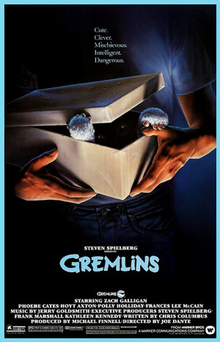
Gremlins came out the same year as Silent Night, Deadly Night and while it did receive criticism for it's violence(which hurried along the PG-13 rating), the Christmas themes in the film pretty much went under the radar there. The movie was a summer release, which kept it a good way away from being connected to the holiday. In fact, some critics even thought Gremlins should've been a Christmas release!
What Gremlins did show was that you can have your subversive Christmas cake and eat it, too, just as long as you balanced the terror out with some sort of cuteness and promise that the good guys will win out in the end:
By the 1990s, slipping in Christmas to certain adult themed films was more accepted as hits like Die Hard and Batman Returns made that theme a casual yet central element to their story telling.
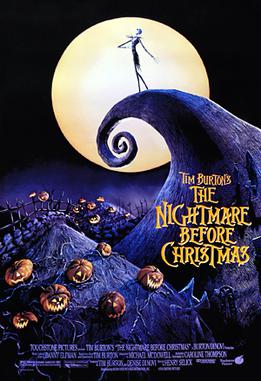
Even today, one of our most popular holiday films is 1993's The Nightmare Before Christmas, Tim Burton's stop motion salute to both Halloween and Christmas, a pair of holidays that children of all ages delight in.
ANBC has had theatrical re-releases over the years and is even a featured attraction at Disneyland's Haunted Mansion that runs throughout the holiday season. Not to mention all of the movie tie-ins products that still sell strong(I should know, I own a few myself), this twisted take on Christmas is pretty much beloved, right up there with Charlie Brown and Ralphie's leg lamp:
So, how will Krampus fare in this category? Hard to say, as it doesn't appear to be scary sweet like Gremlins or TNBC and we are close to an election year with a lot of loud mouth types looking for any excuse to cause attention getting trouble, so there's that.
Krampus could be a lot of freaky fun for an older audience who needs a break from the relentless holiday cheer that is heavily promoted(and looks to be satirizing, judging from the opening shots in the trailer) these days. Don't get me wrong, I like Christmas yet like sugar or salt, a little goes a long way while a lot kills the palate.
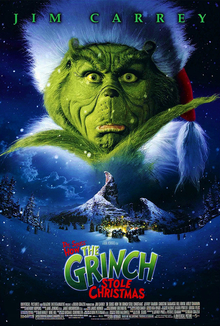
Maybe Krampus will be overlooked by the busybodies and make it's mark with moviegoers without any controversy, that is a possibility. If it does occur some righteous minded protest, maybe we should remind those people that there are much worse things out there to worry about, not to mention watch as your holiday cinematic treat. Much, much worse as Jim Carrey's Grinch proved in coal in your stocking abundance:
With the fresh new season of TV watching almost upon us, awaiting both old and new shows can be hard to bear and yet, anticipation does tend to spice things up a little. One of my favorite genres is the comic book based one, focused on those caped and cowled figures of justice that is growing almost as big as their cinematic counterparts are.
As superhero themed series are on the rise, so are the villains in the second season of Gotham, due to start up again on September 21. As Oswald Cobblepot takes his crimelord throne, other bad guys and gals are making their moves also and some of the new batch of evil doers include Mr. Freeze, The Mad Hatter and Clayface.
Also, we will be seeing much more of Jerome,our future Joker, and Barbara Kean, who is now an official villianess as she and other potential Arkham residents are being recruited by a brother and sister act named Galavan for upcoming mischief making in town. I know that plenty of people became quickly disillusioned with the first time around for Gotham but you may want to reconsider a return visit as season two does look rather inviting indeed:
Worlds will truly collide on season two of The Flash, as Barry's whirlwind solution to saving his reality opens up the door to Earth 2(yes, it's an alternate universe deal) with new friends and foes dropping in to make more trouble.
One of those potential allies is Jay Garrick, E2's version of The Flash but one of his closest friends on Team Barry may become the frozen menace Killer Frost sooner than we think. I really like how this show is not afraid to play with the established comic book characters and world building here, making October 6 an early seasonal treat to savor:
Let's not forget Marvel, who is launching season three of Marvel's Agents of S.H.I.E.L.D on September 29,with an eye towards the Inhumans War. With Skye now taking up the name Daisy and taking the lead on finding her fellow Inhumans, we are definitely going to see some serious super powered action.
There is talk of a crossover with Agent Carter(whose second season might begin early in 2016) but how that's going to work out, given the very different time periods for each show, I don't quite know. It will be interesting to see both series pull this off.
No word yet on any other possible tie-ins to the Marvel Cinematic Universe for MAOS but I think that Coulson and company will have rather heaping plates of trouble stew to handle without that added bonus, not to mention an unexpected guest or two at the door:
And now we have to deal with Supergirl, starting her series run on October 26. I still have a truckload of doubts regarding this take on Kara and friends but in the interest of fairness, will watch at least two episodes before ultimately deciding yes or no-go here.
Since this show will be airing on Mondays opposite Gotham, I may have to check it out either via replays or on demand viewings. Some of Superman's enemies are going to be featured here, such as Livewire and Reactron ,which should be interesting, along with a character who may become the Toyman.
I don't want to hate this show but that early trailer really put me off. However, Supergirl is being developed by the same team that put Arrow and The Flash on the CW map, so maybe that first impression was merely a mistaken one:
Well, there will be more fall fantasy goodies to enjoy as Sleepy Hollow, iZombie and The Vampire Diaries promise to return to the tube, Yet, superheroes and their respective villains are that special flavor of fun that's hard to resist, especially when they come straight out of Gotham:
I have to confess that the intense fascination that many people have for Bill Murray amazes me. The man is talented and everything, don't get me wrong but I've grown so used to him over the years that seeing him do well in anything doesn't surprise me.
Then again, I grew up with Bill Murray, metaphorically speaking. From his days on Saturday Night Live to hit movies such as Meatballs, Stripes, Ghostbusters and Groundhog's Day and nowadays to his almost regular appearances in Wes Anderson's films, Murray has become a constant mainstay in the pop culture arena. Particularly odd, considering his random public appearances and legendary difficulty to contact directly.
Perhaps the upcoming literary tribute to him, The Big Bad Book of Bill Murray by Robert Schnakenberg, is pop culture perfect for both old fans like me and the new ones just catching up. The book is a biographical encyclopedia that covers nearly every aspect of Murray's life and times, with a mixture of fact and anecdotes about the man that is Murray. And yes, there is a special entry for one of his most famous SNL characters, Nick the Lounge Singer, who he first created during his time at Second City and is loosely based on a real life entertainer:
Not only are there detailed entries for each of his films(with a special ratings system that defines the "Murray" level of excellence in each performance), the book also highlights casting opportunities that he missed or refused like The Witches of Eastwick, Toy Story and Philadelphia(yes, that Tom Hanks movie).
It also reminds you of other TV shows that he showed up in, such as an episode of the cult classic sitcom Square Pegs where he played a fun substitute teacher. I totally adored that show back in the day and can't believe I forgot all about this one!:
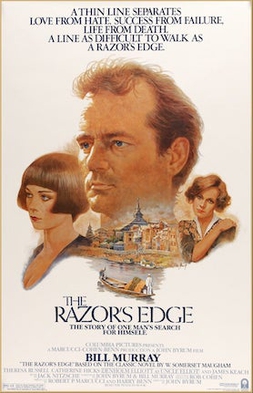
The book also covers Murray's less than successful cinematic choices like Garfield(which he originally mistook for a Coen Brothers film), Ghostbusters II and his attempt at a dramatic debut in 1984's The Razor's Edge.
The Razor's Edge was a personal passion of his, using the early buzz from the first Ghostbusters movie to get the studio to back the project. The backlash from both fans and critics made him retreat from the movie industry for about four years, which in some ways was a smart decision and a needed refresh for his career.
The film has gotten better reassessments as time goes on, yet Murray feels that the whole thing was a mistake. Personally, I don't think it was that bad but then again, I did pay to see Scrooged twice when it was in theaters(and I don't regret that!):
It's to author Robert Schnakenberg's credit that he doesn't shy away from the more volatile side of Murray's personality. From persistent pranks such as a certain phone call he makes every time Road House is on to fights with Martin Mull and Chevy Chase(who both earned the insult "medium talent"), Murray's charms do not wear well with everyone.
That can also work for him,however as the movie What About Bob? proves in abundance. Richard Dreyfuss's preference for theater style acting clashed with Murray's freewheeling approach, making their on screen friction all the more believable and entertaining to watch:
The Big Bad Book of Bill Murray is not something that can be read in the usual straightforward manner. It's a handy reference guide to the wonderful weirdness of the man that shows you something new about Murray every time you open it up.
The book will be released on September 15 and while many people will be adding it to their holiday gift lists, this is a fun gift to give to yourself.
In roaming the pages of The Big Bad Book of Bill Murray, I found myself pleasantly engaged in recalling those past moments of fun that Murray has given us over the years and makes me look forward to more of his particular brand of mirth as time goes on. I can now understand why to some fans, a guy like Bill Murray is truly a one of a kind that deserves to be sitting in a special spotlight and that we should appreciate him all the more for refusing to get stale:
A new season of American Horror Story will begin next month, this time set in a hotel with some very unusual guests. One of those residents will be played by Lady Gaga and the speculation about her character was running wild indeed.
Most of that mystery has been revealed in the latest issue of Entertainment Weekly, where we learned that her AHS persona is named The Countess and yes, she is an immortal drinker of blood. According to producer Ryan Murphy, there will be "no capes, no fangs" as her blood lust is meant to tie into the show's central theme of addiction.
First off, I'm not completely surprised since based on Gaga's EW cover alone, she has the look of a chic vampiress that Catherine Deneuve possessed in abundance when she starred in The Hunger, a 1983 adaptation of Whitley Strieber's novel.
In that story, Deneuve played Miriam Blaylock, a natural born vampire whose formerly human lovers never lasted long. She and her on his way out mate John(David Bowie) used ankh amulets with blade bottoms to drain their victims, much like Gaga's Countess has her razor tipped gloves for the same purpose.
Not sure if AHS:Hotel will have the same vampire rules as The Hunger but there's clearly an inspiration connection there, no doubt about it:
Having a vampire as a metaphor for addiction is nothing new, as one of the film trends of the 1990s was to make vampirism stand either for that or the fear of certain blood born diseases.
A notable movie in the "vampire addict" subgenre was actually called The Addiction, a very arthouse look at those creatures of the night, courtesy of director Abel Ferrara. Lili Taylor starred as Kathleen, a college student bitten at a party and struggles to figure out the meaning of her new existence.
She does find a mentor of sorts in Peina(Christopher Walken) but even that bit of guidance is not enough to quench Kathleen's endless thirst or deal with the guilt of giving into her dark desires:
That addiction theme has been recently revived in vampire films with 2013's Only Lovers Left Alive as Tom Hiddleston and Tilda Swinton are Adam and Eve, a separated immortal couple so afraid of blood poisoning that they avoid feeding directly from humans.
They buy "the good stuff" from dealers but when even those sources are tapped out and their stash is depleted by a greedy relation, the need for a fix brings them together for better or worse.
OLLA wasn't a mainstream hit but it did do well with critics and on the film festival circuit. Like The Addiction, a well known indie director,Jim Jarmusch, was the driving force for this film and the type of artist that Gaga would see as an influence, so I'm sure that she might take a few cues from here for her AHS performance:
Gaga's story line won't be the only one in focus on AHS:Hotel, as we also have Hypodermic Sally(Sarah Paulson) on board, along with the ghost of the hotel's former owner(Evan Peters) and a search for a serial killer known as The Ten Commandments Killer.
However, a good number of folks will be checking in to check out Gaga and having her play a vampire is another sure fire way to draw in horror fans.
While Jessica Lange will be sorely missed, as her roles in the series were truly riveting high points for each one, Lady Gaga taking her turn on this scary stage should be a gruesomely good time had by all.
Speaking for myself as a vampire fan who also adores Gaga's style and substance, I am looking forward to AHS:Hotel as the perfect Halloween treat and I know I'm not alone in that. Until then, my fellow monsters!:
With Banned Books Week coming up later this month, the focus on literary censorship is mainly on grade school and/or high school level reading, which happens more often than we'd like to see.
However, there seems to be a lot more calls for blocking books from students that is coming from college these days. And, sadly enough, these protests are coming from the students themselves. To make things even more odd, the books in question are graphic novels, which many consider to be the more grown-up version of the comic book.
One of the targets has Alison Bechdel's Fun Home, an autobiographical look at a father-daughter relationship in which both of them find that they share more than hair and eye color. As Alison realizes that she is gay, her father's closeted sexuality comes to the surface but not in time to prevent his untimely death.
Both freshman students at Duke University (who had this book as an optional title on their recommended reading list) and Crafton Hills College in California have raised objections to Fun Home, complaining that the book is "pornography" and shows "naked women". Trust me, kids, if you think this is that graphic, you have lived very sheltered lives indeed.
I happen to have read Fun Home earlier this year(part of my goal to read more comics) and this book is a humorously heartfelt story about growing up and learning that your parents are less than perfect yet that's what makes them and you a full human being. Not only is Fun Home an award winning title, the Broadway musical adaptation has just won top honors at the Tony awards. You are depriving yourselves of a wonderful reading and visual experience, you know that thing a college education is supposed to be all about?
The Crafton Hills complaint also includes an objection to Marjane Satrapi's Persepolis, one of the four graphic novels assigned to the incoming English class. The student spearheading this campaign to get these books removed has been quoted as saying "I expected Batman and Robin, not pornography."
Well, first off, Batman comics are much deeper and darker in content than you might think there, young lady(the Christopher Nolan films alone should have clued you in on that one) and for another, who do you think you are to dictate to your other classmates what they should and shouldn't read?
The irony of you claiming that Persepolis is offensive, when that particular memoir has as one of the struggles that it's female protagonist going through is trying to get an equal and decent education in a repressive society, just floors me:
The other two titles on the Crafton Hills College hitlist are Y: The Last Man by Brian K. Vaughn and Neil Gaiman's The Sandman: The Doll's House, both of which are sci-fi/fantasy titles with complex story telling and sociopolitical elements, all of which are subjects that one would reasonably expect to explore in a college course.
Is that these stories are being told in comic book form, where the artwork brings the inner workings of the characters to vivid life along with the actions of the plot, or that you just don't like books that make you think? If so, then perhaps college is not for you. Believe it or not, the works of Neil Gaiman and Brian K.Vaughn are heralded as ground breaking material and if you are quick to dismiss them simply due to format, you are not as smart as you think you are:
Back in my bookseller days, we did order books on a regular basis for a local English Lit course and that professor assigned both volumes of Art Spiegelman's Maus every time.
The only complaint that I or any of my bookstore co-workers got regarding that duo was the price and why didn't we buy back books(that wasn't something we did there)? So, having graphic novels as assigned reading for college classes is nothing new.
Look, if you don't want to read these books, you do have the option of dropping the class. And don't give me that nonsense about not being warned about the material, I know full well that those reading lists are handed out way ahead of time before the first day of class begins. There's no shame in switching courses but it is shameful for you or any other student to demand changes to the assigned reading based on your own personal bias.
The freedom to read also includes the freedom to be taught properly as well and by hindering other students, both present and future, you are abusing that privilege. This protest does not make you sound like an adult, instead you're coming across as a playground bully. So, reassess your educational priorities there and keep in mind that there are more scarier things to deal with both in and out of college than a book:


 Well, as enjoyable as it has been to walk down this section of the rereading road with Steinbeck, I am happy to be done with this book and look forward to starting my fall selection, Little Women by Louisa May Alcott, sometime soon.