Pop Culture Princess

Pop Culture Princess
especially welcome to extensive readers
Showing posts with label Year with Hemingway. Show all posts

Monday, April 22, 2019

Strolling through Paris with a bookish passport

Given the state of current events, it's no wonder that when chaotic times are upon us that we turn to the past in order to find comfort and perhaps a sense of "this,too, shall pass."

Even for countries that are not our own, the urge to make some sense out of despair is just as keenly felt and as always, books are all around us that are suited for these situations.

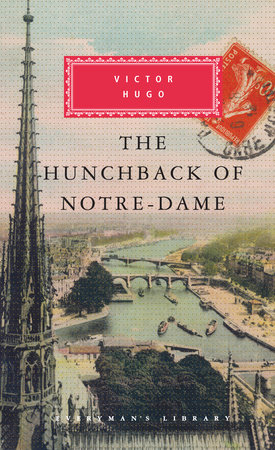
With the recent fire in Paris that destroyed a good portion of the famed Notre Dame cathedral, many have turned to Victor Hugo's The Hunchback of Notre Dame , putting it on the bestseller list in France(and it won't be long before the book is on similar lists elsewhere).

The first publication of this Hugo novel actually encouraged restoration work on the cathedral, which was falling into disrepair during the 1800s and while funds are coming in for the recent fire damage to Notre Dame, interest in this iconic classic work is not solely relied on the need to preserve the impressive architecture.

 The human plight of Quasimodo, the shunned bell ringer of the title as well as the one of  Esmeralda, a woman doomed by the outsider class she belongs to, are relatable and all too real today, despite the social progress that's been made since way back when:

Even without the Notre Dame fire, Paris has been going through a rough bout of protests lately, which feel as if they are an inevitable part of that nation's history.

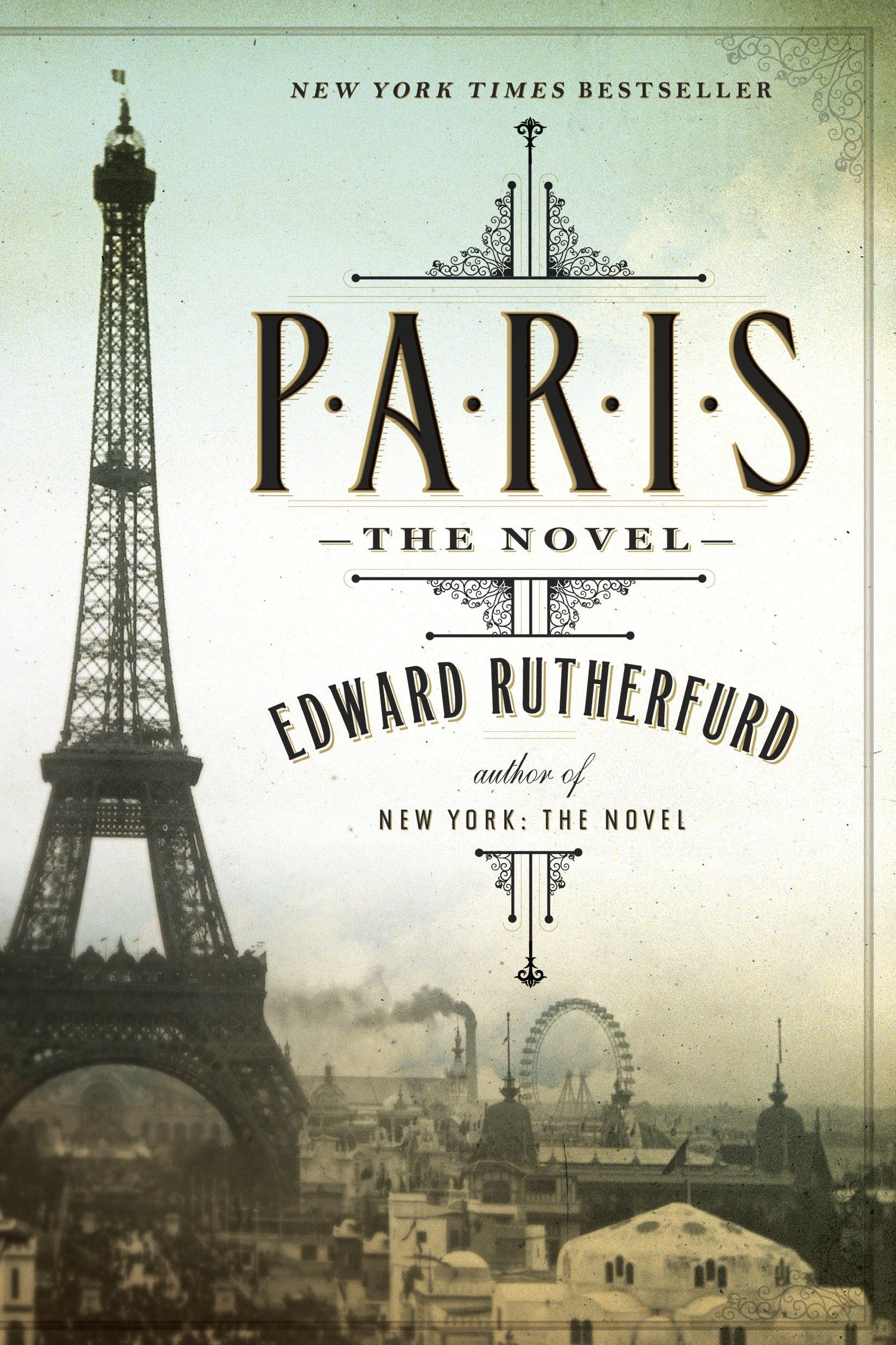
To get a long range view of that city's life and times, the 2013 novel Paris by Edward Rutherfurd showcases the creation of France's capital via the saga of several families through out the centuries.

 From the feuds between the noble houses of de Cygne and Blanchard to impoverished Thomas Gascon becoming a builder for the Eiffel Tower and then later America's Statue of Liberty that then leads to the art dealing Jacob family struggling to survive during the German occupation of WWII, the history of Paris is the creative canvas on which these various family portraits are displayed.

Rutherfurd is best known for his numerous saga novels about England such as Sarum and London but he's no stranger to depicting other major cities via their citizens like New York and Dublin. With Paris, he embraces his love of the fabled City of Lights for all to bask in it's glow:


Yet, with Paris in such turmoil at the moment, it can be hard to see why anyone wants to be there. Fortunately, we also have plenty of books that talk about the high points along with the low that also include some of the historic folk who made that city their home.

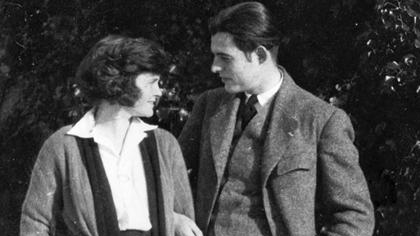
Paula McLain's The Paris Wife set that tone nicely with the story of Ernest Hemingway's first marriage, a good portion of that time spent in Paris. New bride Hadley had much to contend with, dealing with her husband's driving literary ambition and the follies of his friendships in the artistic community that thrived during the 1920s.

While their love didn't fully last, the memories of those early days in Paris lingered on for both of them. This novel was a popular book club selection(as well as inspiring me to spend a year reading the works of Hemingway) and it should be good for a starting point for readers to discuss the joys of Paris again:


No doubt, some will say "Aren't there enough books about America to read instead?" Well, if you believe that the world of books is an international realm of inspiration and imagination, such a point is rather moot at best.

To read a book,novels in particular, about another place and time in another part of the world offers you not only a bit of educational entertainment but a chance at gaining a greater perspective upon the moment in history that you're currently living in.

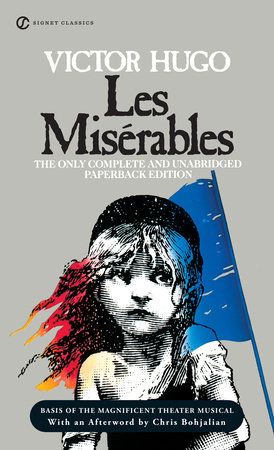
A prime example of this is another Victor Hugo literary legend, Les Miserables, which has never gone out of print and been adapted for many mediums including a beloved musical and right now, a PBS Masterpiece miniseries. This lengthy epic tale of  rebels, downtrodden souls and scoundrels facing such social issues as prejudice, abuse of women and children and overzealous persecution from authorities still resonates in our time with many of those sins of the past persistently clinging on to us centuries later.

Yet, the book does hold the promise of love leading to a better way of life and inspires readers to walk in the footsteps of Jean Valjean in order to do so. It's no coincidence that Paris is one of the centerpieces of Les Miserables as despite all of woes that the city is faced with, it continues to inspire the very best for all of us, even those who only visit Paris on the page:


Thursday, May 24, 2018

Getting the gift of bookish giveways

As any reader who finds themselves online knows, a good giveaway is only a click away. Much like the public lottery, you have to be in it to win it but the lack of return on your time investment can make one reluctant to keep those entries going.

However, when you do win, the joys can be bountiful indeed. At the moment, I just started reading the newest Paula McLain novel,Love and Ruin, thanks to being one of the ten lucky folks at First Look Book Club that won a copy the other week.

This book is a companion of sorts to McLain's surprise success,The Paris Wife, by looking at another wife of acclaimed author Ernest Hemingway. The focus here is on Martha Gellhorn, a journalist and writer in her own right who met Hemingway while he was still married to his second wife,Pauline.

Martha was determined not to get involved with him but they ran into each other while covering the Spanish Civil War and their shared literary passion turned into something more. Despite her deep feelings for Ernest, Martha did her best to remain an independent person, even to the point of making her own choices about the future of their relationship.

I've always found Gellhorn to be the most intriguing of the Hemingway wives,due to her writing prowess and strength of spirit,which makes me thrilled to have a novel devoted to her to enjoy. The Paris Wife inspired me to do a whole year of reading Hemingway, so let's see what this book will bring out in me:


Meanwhile, I have back-to-back Early Reviewer books on my TBR, courtesy of Library Thing and their monthly drawings.

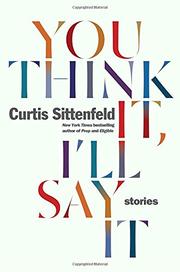
First up is You Think It, I'll Say It, a collection of short stories by novelist Curtis Sittenfeld. Her set of ten tales touch on contemporary topics such as the last major political election but the emotions that her characters deal with are timeless struggles.

For example, the leading lady of "The World has Many Butterflies" discovers that her partner in mockery of their social set is not on the same page as her while "The Prairie Wife" considers revealing a secret that could damage the career of a former love from her teen years. A storm of resentment builds up to a head in "Volunteers are Shining Stars" as a woman who helps out at a local shelter grows to hate the newest volunteer for her upbeat ways.

I'm familiar with Sittenfeld's work and do like her brisk tone and insightful nature towards her characters, so checking out her short stories should be fun. Reese Witherspoon chose this book as her May reading selection, which is another good sign. I really don't do the whole celebrity book club deal but Witherspoon does have really great instincts when it comes to picking a fine read there:


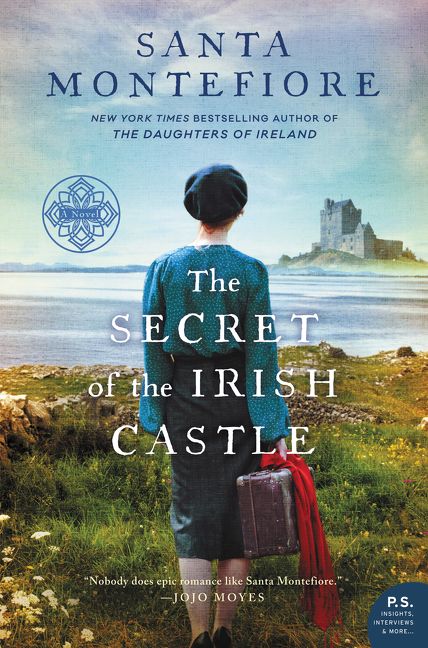
The other book is by an author whom I've never read before but have heard good things about. The Secret of the Irish Castle by Santa Montefiore is actually the third in a trilogy called the Deverill Chronicles and takes place in Dublin of 1939.

The plot follows three women, all of which are connected to the Deverill family, some in unexpected ways. Martha arrives from America to find her biological mother and winds up falling for the dashing JP Deverill, who happens to know all too well about her mother.

The current mistress of Castle Deverill, Birdie, aka Countess di Marcantonio, is determined to make this home and new social position a force to be reckoned with. Unfortunately, those efforts are undermined by the wandering eye of her husband Cesare. Meanwhile,  Kitty Deverill appears content with her husband and children yet the reappearance of a former lover (who is in love with someone else) puts that familial bliss strongly to the test.

Granted, this being the third book in a series make it a bit daunting but I suspect that not reading the earlier titles won't be a problem(the original UK title of this one is The Last Secret of the Deverills, changed to appeal to a new audience,one would suppose). At any rate, this does sound like my cup of storytelling tea and taking a sip of this most recent brew ought to be fine indeed:


While you can't always rely on book giveaways to build up your TBR, they are great for providing those extra bookish bonuses to your reading list. At the very least, a book won this way does help you to save a little money from your book buying budget and allow you to dine on something more substantial than what's on sale at the supermarket. Page turning requires properly fed energy,after all!:


Friday, April 27, 2018

Setting up some early summer reading with these May/June reads

It may seem too soon to talk about summer reading, especially since the weather outside has been extremely frightful well beyond the winter season limits.

However, summer does get fast forwarded a lot these days, from movies to TV to fashion, so planning ahead for your big beach reading TBR is not such a bad idea.

Now you don't have to get too ahead of yourself here-just take a quick look at these upcoming titles for May and June, in order to start your literary mixing and matching:

WOMEN OF AND AHEAD OF THEIR TIME:

 LOVE AND RUIN: Paula McLain's The Paris Wife gave readers a fresh look at Ernest Hemingway's first wife Hadley and she returns to that story telling well to check out Martha Gellhorn, the third Hemingway bride, who was the only one of them to leave him on her own accord.

Martha was quite an independent spirit already when she met Ernest in a Key West bar in 1936. As a wartime journalist, she encountered him during coverage of the Spanish Civil War and their intellectually adventurous natures clashed but ultimately clicked together romantically.

However, each of them possessed an equally strong will that made it hard to find any sort of compromise in marriage, particularly on Hemingway's side. Nonetheless, Martha did what she could to keep their love on course yet refused to surrender her true self.

 I've always found Gellhorn to be truly unique beyond her spot on the Hemingway wife scale and McLain has proven in the past that she's more than capable of making such real life ladies live on the fictional page(May):


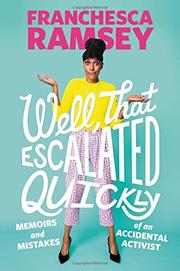
WELL, THAT ESCALATED QUICKLY: Comedian and social media commentator Franchesca Ramsey has been making many of us laugh and think with her YouTube videos(including hosting MTV's Decoded) and appearances on NPR,CNN and Comedy Central for a good long while now.

With her upcoming memoir, Ramsey not only chronicles her journey from blogger to internet sensation, she also discusses the ways in which we communicate in this high tech age and yet still manage not to really listen to one another on important issues.

A mix of sharp wit and heartfelt humor,Ramsey gives us insights on our ever confusing modern times with sincere enthusiasm for everyone to work together for the better. I first saw her work on the canceled-much-too-soon The Nightly Show with Larry Wilmore and hope that this book urges others to watch how she hashes things out(May): 


THOUGHT PROVOKING THRILLERS:

THE PERFECT MOTHER: Aimee Molloy's debut novel goes inside a group of upper class mothers who wind up sharing more than baby care tips among each other.

The May Mothers of Brooklyn delight in bonds of new motherhood together yet it is Britt who encourages her sisters in babyland, Colette ,Francie and Winnie to take a night off during one hot summer to enjoy a grown-ups only romp.

Winnie is reluctant to go but gives in when Britt provides her with a babysitter for her son Midas. Their good time comes quickly to an end,however, when the sitter calls Britt to let her know that Midas was taken from his crib while she slept.

The citywide search for Winnie's son has her friends doing all they can to help find him but along the way, a handful of secrets and lies become exposed and considered for usefulness towards their mutual goal. This book has already been sold to the movies and should make for a stunning new read this season indeed(May):


THE WORD IS MURDER: Author Anthony Horowitz gets a bit meta in his new mystery novel as he becomes one of the characters in this modern day twist on Sherlock Holmes.

Holmes in this case being Daniel Hawthorne, a disgraced former DI who is asked to investigate the unusual murder of socialite Diana Cowper. Seems that the lady in question made her own funeral arrangements several hours before she was discovered strangled to death.

Hawthorne sets up a partnership with Horowitz, planning a true crime book about the case as the end result. Things get stranger than fiction as they go along, with a gruesome event from Diana's past bringing along some seriously deadly baggage and offering up a number of suspects who couldn't have possibly done it.

Last year, Horowitz's Magpie Murders gave readers a clever spin on Agatha Christie and I suspect with this book, the ultimate reveal is going to be more than elementary to any of the Watsons out there(June):


A BOOKMARK OF FAMILY LOVE:

 THE BOOKSHOP OF YESTERDAYS: In this debut novel by Amy Meyerson, we meet Miranda, who finds herself inheriting the book store owned by her favorite uncle, Billy. She hasn't seen him in years, due to a fight between him and her mother that was never resolved.

Miranda does feel honored to be given Prospero Books, a store that she has fond memories of, yet wants to know more about Uncle Billy and why he fell out of touch. With only a mysterious book and letter to guide her, Miranda sets off on a strange scavenger hunt(much like the ones Billy used to plan for her) to learn the truth.

This story does sound like charming book bait for devoted readers and judging by a couple of names placed within this narrative, Shakespeare is bound to pop up but that won't be the only bookish clue that will keep the pages turning, I'm sure(June).

I hope this list will be a good starting off point for your future reading plans as summertime draws ever nearer. Also, it's important to take on new books that are not connected to a series as we all know just how long that wait for the next one could get colder than the winds of winter:

Friday, December 30, 2016

My Year with Hemingway chimes out as we learn For Whom The Bell Tolls

I suppose it's oddly ironic that my last post of 2016 should be the wrap-up of My Year with Hemingway reading project. Like most of this year, this challenge had a lot of ups and downs,along with plenty of sad moments.

 Yet, it was a fulfilling one that did offer me some insight into a great American author, not to mention some excellent reads, which made it all worth while.

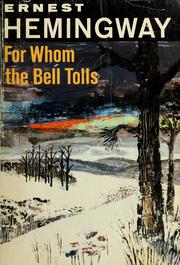
 My final Hemingway novel, For Whom The Bell Tolls, is certainly not a cheery book for this time of year as it takes place in Spain during their Civil War in the late 1930s, which was well known to Hemingway as he was a war corespondent over there during that period.

Most of the story is told through the eyes of Robert Jordan, an American who has joined the fight against the fascist forces overrunning the country. Jordan is sent to work with a group of guerilla fighters on a mission to blow up a bridge that could be crucial in an upcoming battle.

 As he meets up with the group lead by the laconic Pablo, Jordan slowly yet surely bonds with them all and in particular with Maria, a young woman who is still recovering from the horrors of war. As the time grows near for the attack, tensions rise, loyalties are questioned and dreams for the future become just that, dreams and nothing more:


The book has been made into a film more than once; the best known version being the 1943 one starring Gary Cooper as Jordan and Ingrid Bergman as Maria that won a Best Supporting Actress Oscar for co-star Katina Paxinou.

I don't know if I will see that movie anytime soon but if they do a remake, I think Quentin Tarantino should write and direct. A good portion of this story involves intense conversations with occasional bouts of violence, a trope that he's dead familiar with.

Frankly, I'm surprised that Tarantino hasn't done any Hemingway adaptations as both he and Ernest do share a deep interest in exploring interpersonal relationships that go awry along with a taste for juicy monologues and the verbal profane. Maybe someone should pass a copy of the book over to Tarantino, just to see if he'll be inspired to make his mark on such material:


Hemingway met up with the woman who was to be his third wife,Martha Gellhorn, during his time in Spain and it's no coincidence that the book is dedicated to her.

Also not a coincidence that the two main women in this novel are two of the strongest females that Hemingway ever wrote. Pilar, the woman who stands at Pablo's side(and at times, way ahead of him) is a formidable person in her own right.

She's tough and cynical, yet has a soft spot in her heart for the likes of Jordan, Maria and even Pablo when he goes back and forth between loyalties.

One of the most powerful portions of the book is when Pilar relates to Jordan an account of Pablo and company wiping out fascist sympathizers in a small town. That whole story would make a movie unto itself,as she tells it with true feeling and precise detail.

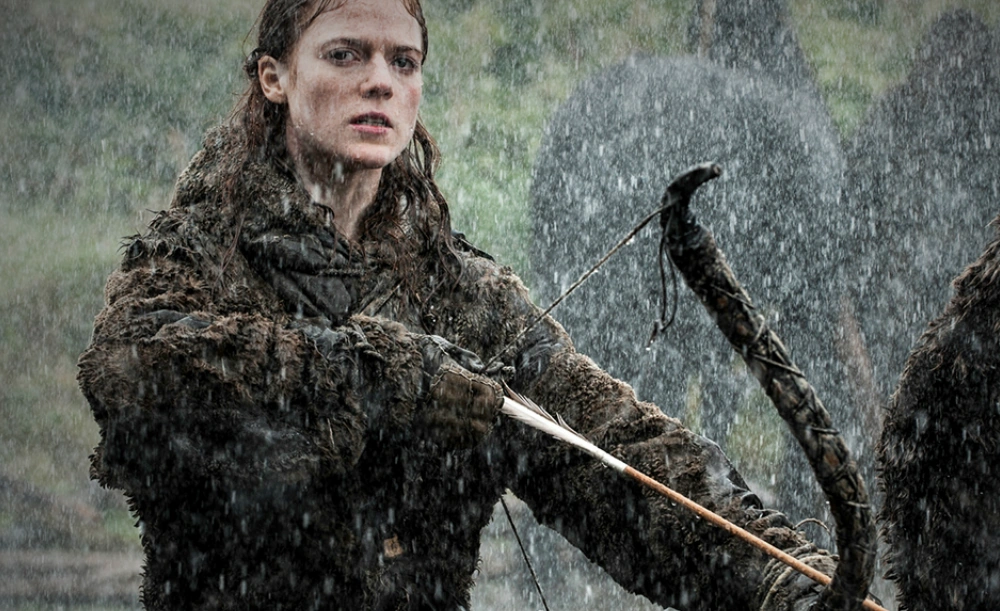
Maria may appear to be a shrinking violet at first but as Jordan gets to know her better, her inner core of strength is revealed. Her love for Jordan is fierce, reminding me of a certain gal from Game of Thrones who would be just as quick to tell Robert Jordan that he knows nothing:


All in all, I have to say that For Whom The Bell Tolls is an epic look at the small scale in love and war. Don't know if I'll read it again but I am glad that I took the time to do so.

So, my Year with Hemingway is done and in conclusion, my overall impression of him is that of a man conflicted in both life and art. Granted, that doesn't excuse any of his faults yet his work does showcase what was best in him, which is more that most people are able to leave behind them.

I do have another reading project lined up for 2017(it's much less intense) and I'll take part in a blog tour and/or a readathon along the way, to be sure. One thing that I feel confident in saying as both this year and my reading time with Hemingway ends is that despite whatever the world throws in our path, we can face it together with a good book by our side.

As part of this project, I've had fun matching up songs to the books and this number from Les Miserables entitled "The Red and The Black" fits FWTBT like a glove to me. The song,sung by a number of characters, illustrates well the push-pull between romantic love and love for a cause, themes that ring throughout the book.  Hopefully, this time next year, there will be less of angry men and that we will see the night that ends at last:


Friday, October 28, 2016

My Year with Hemingway takes a long walk with his short stories

One thing that you can't get around when diving into Ernest Hemingway's body of work is his short stories; to avoid them would be like a Shakespearean scholar who ignores the Bard's sonnets.

Since there are several collections of his short stories, for my Year with Hemingway I went with one huge anthology which has the first forty-nine stories that he had published. After all, certain well known tales were included(which I will go over in a moment) and it's interesting to check out those that didn't get as big of a fanfare.

It took me longer than I expected or intended, as I literally finished the book over an hour ago as of this writing. Part of the reason for such a dragged out read is that my interest in short stories is more of a "take it or leave it" deal. Don't get me wrong, there are short story collections, either by a single author or several, that I've enjoyed but the format in general is not my instant go-to for fiction.

Enough complaining from me-let's go over some of the big name stories that I did like. One of the first ones out of the gate here was "The Short, Happy Life of Francis Macomber", in which the title character experiences a very brief moment of personal fulfillment that leads to his doom.

 The entire story is set during a hunt in Africa, where Macomber is shown to be less than adequate when out with Wilson,the professional guide he's hired, or with his wife Margot. Wilson has no respect for his client, especially since he is also sleeping with the man's wife(who is broadly painted as the coldhearted sort for the most part).

 To me, the best part of the story happens early on during the first hunt when the viewpoint of the lion that is being targeted by Macomber and company is front and center. It's a sharp bit of writing that nicely breaks into the human interactions and adds nuance to the narrative, which pays off much later:


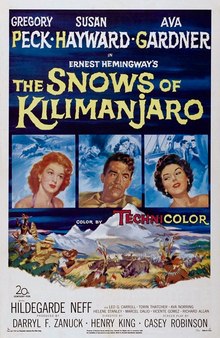
The major story that drew me to this collection was "The Snows of Kilimanjaro" and it does not disappoint. A writer named Harry is slowly dying in a safari camp, due to an injury that started off minor but was neglected to the point where serious infection set in.

Harry, when not fighting with his wife Helen, takes a mental inventory of his life that looks upon his successes and failures in equal measure.

 Hemingway engages in some stream of consciousness at times here, which works out well with the otherwise straightforward tone of the story. A good chunk of the narrative, particularly Harry's personal life, feels a touch autobiographical, which adds strength to the narrative and a good solid punch to the conclusion. When TSOK was made into a movie in 1952, Hollywood went for a happier ending that displeased Hemingway greatly and I don't blame him for that. If they ever attempt a remake, sticking to the source material will have more dramatic impact:


Many of the stories in this collection are Nick Adams tales, a character that only appears in Hemingway's short stories and never one of his novels.

Nick is said to be a fictional stand-in for Hemingway himself and a good number of those stories are set in different portions of Nick's life such as "The Doctor and The Doctor's Wife" in childhood, "The Big Two Hearted River" in young adulthood and "Fathers and Sons" as Nick begins to appreciate his father once he has become one himself.

Some of the Nick Adams stories feel like early drafts of Farewell to Arms( particularly the ones where Nick is in military service and in one story, "Now I Lay Me" he is called Lt). For the most part, he seems to be right at home when dealing with nature as in "The Big Two Hearted River", which is divided into two halves and details a solo fishing trip. Nick is an okay guy but upon reading these stories, he's best taken in small doses which is just as well that he didn't inspire a full on novel directly:


As for the lesser known stories, I really enjoyed "My Old Man" where a boy named Joe has fond memories of his dad, a rather corrupt jockey, and impressed at the nerve it took to write something like "Today is Friday".

 The latter is a mini-play, where three of the Roman soldiers that took part in Christ's crucifixion go out for a drink afterwards. Quite a bold subject for that time period and if someone dared to act it today, I don't think it would go over well with several parties.

Well, despite how long it took, I am glad to have experienced Hemingway's short stories. Their intensity, brief drama and sharp dialogue are important points of style that are magnified in his novels and I think that I'll be better able to appreciate the last book in my Year with Hemingway,For Whom The Bell Tolls, by having read through these.

In the meanwhile, let's wrap this up with my song choice for this book and since there are multiple people,places and things focused on in the short stories, the theme song from the 1986 movie True Stories is so on point here. When it comes to Hemingway, it's a wild,wild life indeed:


Monday, September 19, 2016

My Year With Hemingway takes to the Sea with Spencer Tracy

At this point in My Year With Hemingway, things are a little slow going. Ironically, perhaps I should have picked up a shorter collection of his short stories as my edition of the first forty-nine that he published is quite the mixed batch.

So, in order to revive my story spirits, I watched the 1958 film adaptation of The Old Man and the Sea, starring Spencer Tracy in the title role. I not only read the book earlier this year but also read a nonfiction account(The Hemingway Book Club of Kosovo) about the influence of the novel upon folks in a war weary situation who happened to have watched this particular film version. So, this has come full circle for me, you could say.


The first thing that strikes you about the movie are the striking visuals that director John Sturges(who had help from Henry King and Fred Zimmerman, with neither one getting any onscreen credit) was able to capture. The beautiful shots of the sky both at sunrise and sunset are breathtaking to behold and aid greatly in setting the tone of the story right away.

One thing that you also noticed right away is the heavy reliance upon narration. Most of the actual text of the book is read by Spencer Tracy and given that this is a novel with very little interaction with other characters and at times a one man show, it's understandable why that creative choice was made.

 However, there are certain scenes(mainly early on in the film) where the narration really isn't necessary to convey what's going on between the characters:


When it gets to Spencer Tracy on his own, battling the great fish that drags him along for days, the film is at it's strongest. He evokes the serene angst of the character as easily as breathing and you do root for him all the long while.

The best asset that this film has to offer is Tracy's performance, which did earn him an Oscar nomination. The movie did win Best Score for Dmitri Tiomkin, who really wrote some gorgeous ear candy that suited the visuals(which won Best Cinematography) splendidly.

Too bad the same can't be said about some of the special effects,particularly the fake marlin they had to built as Santiago's catch. However, given the limits of both the source material and the technology of the day, the cast and crew did a decent job with what they had:


I did at least get inspired to tackle more of the short stories and like Santiago, will give myself more line to reach the end with them. As an adaptation, I would recommend this take on Hemingway's most iconic work even if it felt like a 3-D audiobook at times:


So, I plan to stick with the short stories until the end of October and hopefully by November, I'll be ready to start the final book in my challenge, For Whom The Bell Tolls.  It should be long enough to last me to New Year's Eve, I think.

Since a good deal of this novel was inspired by Hemingway's time during the Spanish Civil War and his relationship with Martha Gellhorn(the most intriguing of the Hemingway wives,imo), I'm pretty eager to check this one out.

Not sure about seeing any of the movie versions of FWTBT, despite the many Oscar nominations that the 1943 adaptation received. It might be best if I read the book beforehand, in order to absorb the depths of the story without having to picture any Hollywood faces for the characters. Some tales are best told on the page,as with Old Man and the Sea, but we'll see with this one:


Monday, August 01, 2016

My Year with Hemingway fills it's plate at A Moveable Feast

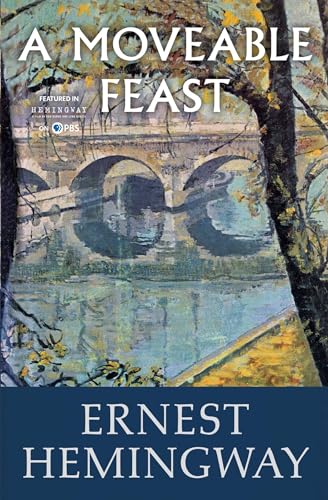
For the summer of My Year with Hemingway, I thought it best to take up some a bit on the lighter side(not to mention short and sweet) so my choice was his memoir of Paris,A Moveable Feast.

AMF covers his early days in Paris with his first wife Hadley, when he was still a struggling writer and happy to make do with long walks to cafes and simple meals in order to enjoy living in that city. Paris was and still is a huge drawing point for artists of all sorts, with the 1920s being one of the cultural highlights of the century.

Hemingway not only talks about the city, he also reminiscences about the other writers he met there, such as Ezra Pound, F. Scott Fitzgerald and most notably, Gertrude Stein. She was a major influence on him and many of the authors and artists in her circle, which she dubbed "the Lost Generation".

One of her great interests was art,particularly paintings, and Stein often encouraged Hemingway to spend what spare money he could on it rather than clothes or even books. She acquired quite a collection herself there, although she could be rather picky about who she gave her patronage to:


What's truly charming about the book is Hemingway's descriptions of walking about Paris to check out the small shops, find a good place to have a drink or make plans with Hadley. His love for her really shines and at times, you can feel his regret about making a mess of that marriage.

While he does wax poetic about those times, Hemingway does talk about how rough things could get there, especially after his first son Bumby was born. Granted, he still managed to have enough money to travel a bit(one major chapter goes over a hectic time he had with Fitzgerald on a day trip) and occasionally gamble a little but he did also borrow a good deal from certain friends(more on that in a moment). Nonetheless, Hemingway clearly felt that any struggle to live decently in Paris was a struggle worth having. His love for the city sings out with every other page:

A Moveable Feast happens to be a reread for me,as I came to it many years ago when I became interested in Sylvia Beach, the original founder of the iconic bookstore Shakespeare & Company.

Sylvia started the bookshop as a place for Americans overseas to gather and exchange artistic ideals. She offered plenty of support to writers like Hemingway(who she also loaned books and money on a regular basis) and he never forgot her kindness. In fact, when Paris was liberated near the end of WWII, Hemingway was there and made sure that Sylvia was safe and sound.

Sadly, she was unable to maintain the shop after the war but Shakespeare and Company is still in existence today, run by people who keep true to Sylvia's idea of an oasis for artists. A fine legacy for both her and Hemingway, if you ask me:


Taking a revisit to Hemingway's Paris was a good time and a welcome relief from a lot of the stress going on in the world these days. The book had a resurgence in Paris recently, due to the terrible attacks there and I know that if Hemingway was still with us, he would be in mourning for the terrors being inflicted on his beloved city.

However, we must look ahead to better times and the next stop on my Hemingway tour is a reading of his short stories. I found a good collection that contains the first forty nine of his brief yet brilliant tales(including The Snows of Kilimanjaro, which I'm very interested in exploring), so that should be enough to end the summer and start my fall reading with.

To wrap this up, here is my chosen theme song for A Moveable Feast and no, it's not a French tune at all. To me, Joe Jackson's "Steppin' Out" has the  elegant romantic feel that you get from Hemingway's fond memories of Paris:


Thursday, June 30, 2016

Erika Robuck and Michael Palin share some adventure time in My Year With Hemingway

Starting off the summer season in My Year With Hemingway, I decided to go for a book set in one of his favorite places,Key West in Florida during the 1930s.. The title of Erika Robuck's novel Hemingway's Girl does not refer to his then wife Pauline but to Mariella Bennet, a young woman who becomes their household maid.

Mariella is the sole supporter of her recently widowed mother Eva and her two younger sisters,Estelle and Lulu. She meets Hemingway by chance one night as the two of them are attending a local boxing match. He admires her strong will and during their friendship, refers to her as "daughter." Yet there is a slight air of  attraction between them.


Mariella does her best to ignore that depth of feeling towards him and it helps that she falls in love with Gavin, a WWI vet who is working on a government construction project.  Not to mention while working for the Hemingways, she gets to see both the good and bad of the acclaimed author's nature.

One of the strengths of the book is how well developed a character Mariella is(she's loosely based on a real life person in Hemingway's life at that time) and how even without Hemingway, her story is truly compelling. From mourning the loss of her father to working out her feelings for Gavin and Hemingway, as well as working towards a dream to have her own fishing boat, she is a solid leading lady in her own right.

There are some moments in the book that brought to mind another wonderful novel involving a legendary artist and a young maid who inspired him. Girl with a Pearl Earring touched upon similar themes yet Hemingway's Girl has a more down to earth sensibility in it's depiction of an artist and potential muse. Mariella always insisted that Hemingway never use her as one of his characters and it's a promise that he keeps,for the most part:


Erika Robuck not only gives her characters, fictional and otherwise, vivid lives on the page, she also blends in a true historical event known as the Labor Day hurricane of 1935.

 Hemingway assisted in the clean-up of the devastating aftermath of that storm and wrote a scathing article about the lack of government effort to protect the people caught in it's path. That disaster fits well into the story and adds some extra substance to the overall arch of the novel.

While Hemingway's Girl has  it's own unique style, I believe that fans of historical Hemingway fiction like The Paris Wife would truly enjoy this book. It's a wonderfully woven tale that gives it's heroine her independence while allowing the spirit of Ernest Hemingway to make his mark upon her journey towards adulthood:


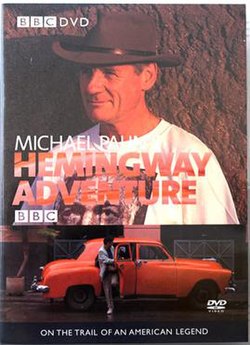
 As a companion piece, I watched Michael Palin's Hemingway Adventure, a travel documentary that the Monty Python player did for the BBC back in the late 1990s. As a fan of the author, Palin was delighted to visit the many places around the world that Hemingway had been, from Spain to Key West to Cuba as well as parts of Africa and even the Chicago suburbs where Hemingway grew up.

He sets  out to do some of the things that Hemingway did in life, such as hunt and fish(with less than thrilling results) and during his time in Cuba, makes several attempts to interview Castro. That running gag is one of many humorous highlights that Palin uses to enhance the experience for the viewers and he succeeds splendidly at that:


The only real flaw in the series is that the sequences are not set within a linear time frame. We go from one place to the other without much rhyme or reason to anchor the trip,for the first half,anyway. It didn't need to be a complete birth to death timeline but a little more structure might have helped. Nonetheless, Palin does entertain as well as inform both readers and viewers alike.

Well, this is a nice start to my summer and my next literary stop will be A Moveable Feast (which is actually a reread for me). I hope everyone has a grand Fourth of July weekend and to send you off with a song in your heart, here's my theme song pick for Hemingway's Girl.

 ABBA may not seem very Hemingway-esque but the heartfelt lyrics of "Chiquitita" reflect the emotional connection between Mariella and Ernest Hemingway nearly pitch perfect to me:


Thursday, May 26, 2016

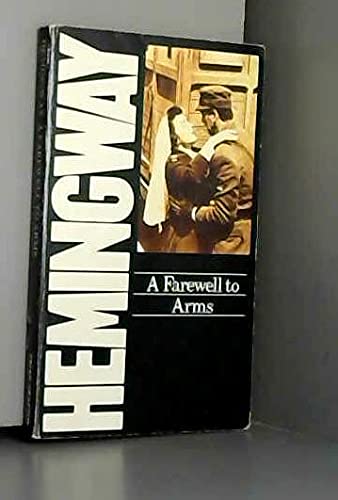
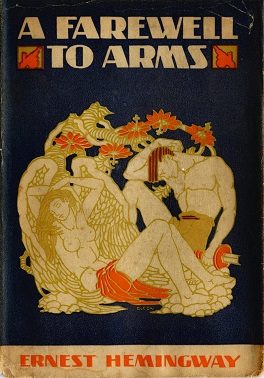
My Year with Hemingway welcomes A Farewell to Arms

While my list of books for My Year with Hemingway project isn't set up as a one-per-month deal, I did find myself wondering why a relatively short book like A Farewell To Arms was taking so long of a time to finish.

The edition that I own is about three hundred and thirty two pages, which for a major novel is a moderate page number. Other personal factors(including a readathon break) came into play but my ultimate conclusion upon turning that last page this morning was that this was a story that worked best when taking a good amount of time to fully absorb it.

On the surface,AFTA seems like your typical war time romance; boy meets girl, boy goes off to war, boy seeks girl out after the battle is done. However, when it comes to Hemingway, things are never that simple despite his style of simply laid out sentences.

  Lt.Frederic Henry and Catherine Barker are thrown together by chance but also by choice. Henry is an American who chose to join the Italian forces during WWI as an ambulance driver while Catherine is a British nurse who volunteered as well. Their connection is intense, made more so by the ever present war fare nipping at their heels.

Henry's emotional and physical journey truly takes off when during a retreat from battle, he is separated from his men and forced to flee, due to officers being executed by those seeking a scapegoat for their military loss. His main motive for survival is Catherine,who is pregnant with his child, but also the sheer determination to get as far away from the collapsing battle front as possible:


 While A Farewell to Arms is a solid enough love story, the most vivid parts of the book are between Lt. Henry and his fellow soldiers in those calm before the storm scenes during meals or sharing a drink as well as the long trek that he and his men go on after the retreat has begun.

You can feel the mud beneath your feet or that tang of frustration in the air as Henry and company are trying to figure out which move is the right one to take next. Don't get me wrong, his romantic reunion with Catherine is great and their time spent together in Switzerland is an oasis of relief in the narrative.

However, when it comes to love and war in this novel, it's the war that wins out in the end. There's a bit more depth of feeling in Henry's friendships with the men he meets such as Rinaldi(who he even brings up briefly to Catherine once they're reunited),the priest that he encounters from time to time and even Count Greffi, a mentor of sorts who he spends one afternoon with.

There is a solid spark between Lt. Henry and Catherine yet it has a steam pressured energy to it that is destined to fizzle out once they hit the shores of conventional life.  In my opinion, their entire relationship is firmly cemented by the time and place they're in, which is not to say that their love wasn't true. It's just that like many romances that spring up during times of tension due to greater outside forces, Catherine and Henry's long term chances weren't the best.

I suspect that Hemingway sort of knew that(he probably wouldn't admit it) when he wrote the tragic ending there. Granted, the real life love affair that he had which inspired this book didn't end the same way but I have no doubt that he felt it was just as harshly painful. The ending does have an abruptness to it,which does suit the whole tone of the story but I can see some people not being happy with that. Well, if you're looking for a happy ending, Hemingway is definitely not your man:


Speaking of Hemingway's inspiration for AFTA, I also watched the 1996 film based on that story entitled In Love and War.  I had my doubts about Chris O'Donnell playing a young Ernest but he did reasonably well. However, he and Sandra Bullock(as American nurse Agnes von Kurowsky) didn't really have much onscreen chemistry there.

The two of them do their best but there's a very stagey vibe to the whole film that they can't quite shake off. Frankly, it might have been better to turn this production into a made for TV movie, as the style of acting and story telling is far too small for such a vastly arrayed cinematic canvas that director Richard Attenborough provides. Visually, it's  lovely looking but there is a hollowness that even he is unable to fill.

The screenplay is based upon a nonfiction account of the romance between Hemingway and von Kurowsky but with several screenwriters attached, it clearly shows that there was some debate over how the overall story line should go. The reviews were not great as many pointed out that the true facts of the story were changed(for example, Hemingway and Agnes never met again after their time in Italy) in order to make a more "romantic" film.

That sound valid but I'm sure that some people like it anyway because of the romance and that's valid,too. It reminds me in a way of the Anne Hathaway Jane Austen biopic Becoming Jane; while far from the most accurate retelling of an author's life and times, it does have enough pleasing elements to make it watchable there:


Well, I am glad that I took my time with A Farewell to Arms. Some meals taste better when slowly savored rather than rushed down in one gulp. I don't know if I will reread it at some point in the future but then again, I might enjoy it more the next time around.

My next read for My Year with Hemingway will be Erika Robuck's Hemingway's Girl, set in Key West,Florida where Hemingway resided with second wife Pauline but the leading lady here is Mariella, a maid in the Hemingway household who finds herself influenced by the author in more ways than one.

I'll most likely pair this with a look at Michael Palin's Hemingway Adventure, which does make a stop in Key West. Should be a good way to start my summer off nicely. To wrap up this time with AFTA, I have chosen yet another song that I think is a suitable theme for the story. Yes, this also happens to be the theme song for the popular cable drama Outlander but the passionate power of this melody speaks to the epic nature of the book to me:


Monday, March 28, 2016

My Year with Hemingway arranges a four course feast of love for Mrs. Hemingway

Part of my reading list for this Year with Hemingway project includes books written about Ernest Hemingway along with those written by him; after all ,the one that started me on this literary trek was Paula McLain's novel The Paris Wife that shows first wife Hadley's version of their lives together.

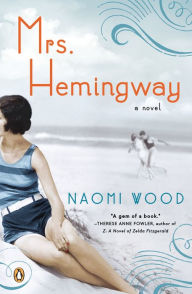
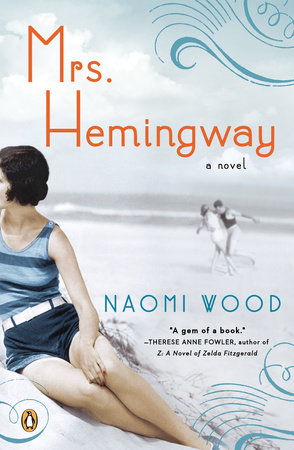
Naomi Wood gives each of Hemingway's wives their say upon that relationship both with him and each other in her novel Mrs. Hemingway. The story is divided into four parts,beginning with Hadley towards the end of her marriage as she,Ernest and Pauline "Fife" Pfeiffer are sharing a beach house together in France.


Part of the reason for their close quarters is due to Hadley and Ernest's son Bumby needing to be quarantined after a bout of illness.  Fife arrived to offer Hadley some much needed companionship,since Ernest intends to join them a little later, but all too soon, it becomes clear that Fife's devotions are meant for Ernest first and foremost.

As much as Hadley wished that it was not so, the mutual romance between her husband and her friend is virtually impossible to ignore. Even their circle of friends that includes Scott and Zelda Fitzgerald(along with Gerald and Sara Murphy) can barely turn a blind eye to that affair.

 Fife's driven desire to have Hemingway as her husband is successful yet several years into that marriage, she finds herself in Hadley's position as his eye turns to Martha Gellhorn, the bold and beautiful journalist who enjoys sharing wartime reporting with him. Unlike his previous brides, Ernest had to talk Martha into marrying him. The two of them were better as lovers than partners in marriage, with Hemingway wanting more of a stay-at-home wife than a fellow writer towards their inevitable end.

By the time Martha was ready to leave Ernest, she was almost happy to hand him off to Mary Welsh, who left her husband and magazine writing career for him.

Mary was with him to the last, as her section of the book deals with her mourning Ernest's death not long after his suicide(which she insisted upon calling an accident). Her grief is tender torture, as she struggles to decide what to do with the papers and other things that Hemingway left behind him.

Over the course of reading this book, I was planning to find the right theme song for this story(it's something that I've been doing for this series) and to my surprise, there are actually two songs that suit this novel well. The first half of the book, in both the Hadley and Fife segments, Carly Simon's "You're So Vain" felt like the solid click of ice cubes in a warm  glass of gin that perfectly expressed the bittersweet pain that each woman went through as Hemingway wanted to have his proverbial cake and eat it too:


 In the later portions with Martha and Mary, however, Wood's stirring depictions of those relationships lead to me to take a more sympathetic look at Hemingway's affairs of the heart.

While Ernest's failings as a husband are clearly shown, Naomi Wood also gives each of the women in his life opportunity to reflect on the good along with the bad moments of their relationship. Hemingway seemed to go all in emotionally when it came to love,no matter how fleeting his central focus was, and that vibrant combination of talent,charisma and chaos is what made him both hard to love and hard to resist.

Wood elegantly captures the voice of each woman,as well as draws engaging portraits of the other people in their lives such as the Murphys(the scene where Martha and Ernest show up to a dinner party very late and Sara seems ready to throw her now cold soup at them is darkly amusing).

 Her ultimate take on Hemingway's wives is that despite their different approaches, the one tie that binds them all together is missing Ernest when he leaves. With that in mind, the other song for Mrs. Hemingway is appropriately titled "Mrs. Hemingway" sung by Mary Chapin Carpenter as a tribute to Hadley. For both Ernest and his other love interests, Hadley was the standard that they all felt they had to live up to and it does bookend the novel quite nicely:


As another bookend to Mrs. Hemingway, I watched the 2012 made for HBO movie Hemingway and Gellhorn, starring Clive Owen and Nicole Kidman as the title characters.

The film begins with their meeting up in Florida during his marriage to Fife(Molly Parker) and continues through their budding romance covering the Spanish Civil War right through to the end of their marriage as Mary Welsh(Parker Posey) enters the picture.

 The movie does cover some of Hemingway's last years and looks in on Martha in her later years as she's giving an interview about her life and times. What really engaged me was Kidman as Gellhorn, both in her younger days and as a strong older woman reflecting on her experiences. She  gave a riveting performance that made you see what Hemingway must have seen in the real life Gellhorn, a smart,determined woman who was eager to live and love on her own terms:


I know the movie received mixed reviews and to be sure, it does have it's flaws(the running time alone needed a good trim) and yes, I could have done without seeing Robert Duvall ham it up as a Russian general ready to have a bar fight with Hemingway over Martha.

However, the movie always held my interest, even during the slow parts towards the end, and while the offbeat artistic choices made here like certain scenes turning from color to sepia tones, not to mention having Martha and Ernest consummating their love in a hotel room during a bombing raid, the performances truly made this all work. The connection between Owen and Kidman onscreen really brings the figures of the past that they're playing come to vivid life, making you understand them a bit more as real people in love yet at odds with each other:


Speaking of movies that didn't get a lot of critical love, I'm going to be viewing the 1996 film In Love and War, starring Chris O'Donnell and Sandra Bullock, that showcases the WWI romance that Hemingway had with a Red Cross nurse named Agnes.

That brief romance was the inspiration for one of Hemingway's iconic novels, A Farewell to Arms, which I will be reading as well. There are about three adaptations of AFTA(one of which was made for TV) but I think that checking out In Love and War might be a more interesting compare and contrast there.

Not sure how convincing Chris O'Donnell is going to be as a young Hemingway, especially after the robust energy of Clive Owen in H&G, but willing to give both him and A Farewell to Arms a fair shot. No doubt one will be truly better than the other but you have to admit, the movie does sound like old school romantic fun:


Monday, February 29, 2016

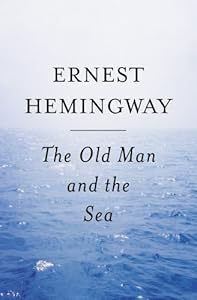
My Year With Hemingway sets sail for The Old Man and The Sea

Having started this Year With Hemingway project off by reading one of his first major books, it only seemed fitting that my next selection would tackle one of his later titles, particularly the one that earned him a Nobel Prize.

The Old Man and the Sea also won the Pulitzer Prize for Fiction a year after it's initial release and it's still assigned reading for most high school students. Part of the reason for that may be due to it's page count(short classics are popular required reading there) but mainly for it's seemingly simple prose.

The tale of Santiago(who is referred to for the majority of the book as "the old man"), a fisherman with a bad string of luck who faces the challenge of his life alone on open waters, is pretty much a straightforward narrative. However, there's a Zen like quality to the writing and this central character that showcases the true complexity of Hemingway's style.

Santiago is a man seemingly content with what little he does have; his boat and equipment along with a small house with a bed lined with newspapers, plus the occasional company of Manolin, his former fishing student.

The most he hopes for in life is to see how well his favorite baseball player Joe DiMaggio is doing and to break his unlucky streak of  coming back from his fishing with nothing to show for it. Even though Manolin is forced by economic necessity to work on a "lucky" boat , the old man is happy to see the boy leave his side, thanks to the skills that he taught him.

Yet when he snags a huge fish that fights long and hard to escape him, Santiago doesn't hesitate in giving his all to that battle. Sure, at some point it would have been sensible to just cut and run, big fish or not but the old man's true goal is not merely to change his luck or show off a big prize to his fellow fishermen.

What he ultimately gains from all of his grit and determination is a revitalized sense of self. Using what little he has on board and even losing or breaking the few tools at his disposal, Santiago proves mainly to himself that his inner core as a man is still intact. His hands may be aching,along with his back, but his spirit for life is as strong as it ever was.

You could see this as sort of a midlife crisis story, especially since many readers look upon TOMATS as Hemingway's commentary on old age, but I think it's more than than. The Old Man and The Sea shows us that it's ultimately about the journey rather than the destination that makes life, even with all of it's hardships, so worth while:


I've also been reading Paula Huntley's The Hemingway Book Club of Kosovo, a memoir of her time in that country along side her husband in the year 2000. He went over to use his legal skills to help bring a proper judicial system to that war torn country and Paula became a teacher of English, helping a set of determined young people try to better their situation via education.

The book club of the title uses The Old Man and The Sea, with the lone edition that Huntley found in an English language book store being copied enough for her entire class to read. While I have finished TOMATS, I'm still almost half way with this story and it's quite a moving one.

Huntley encounters many all too true stories of violence and destruction from the prior regime, which serves to make her more determined to do what she can for her students, who find Hemingway's story rather relevant to their lives. One of the critiques of this book that I saw frequently online was that there was more focus on the horrors of Kosovo and not enough about Hemingway. While I can see what some of those complaints mean, I don't think they're getting the point.

 Ernest Hemingway was also a journalist who covered many international battle fields and war zones, even serving in both world wars and being a reporter on the ground during the Spanish Civil War. Kosovo during this time period(and possibly even now) is the exact sort of turbulent situation that Hemingway would've been at himself, so in that sense, this entire book is in the spirit of his writing:


Having completed The Old Man and The Sea, my next book to read for this project is Mrs. Hemingway by Naomi Wood, a novel that gives each of Hemingway's four wives a spotlight for her to shine in.

I'll be pairing that review with a write-up of the 2012 made for HBO film Hemingway and Gellhorn, which stars Clive Owen and Nicole Kidman as Ernest Hemingway and wife number three, Martha Gellhorn. She was a journalist who met him while they were both covering the Spanish Civil War and For Whom The Bell Tolls is dedicated to her.

I can see Clive Owen quite easily as Hemingway and Gellhorn sounds like quite a woman, so that ought to be engagingly fun.  In the mean time, just as I did with The Sun Also Rises, I've chosen a theme song for The Old Man and The Sea and, no, it's not "Sitting on the Dock(Of The Bay)", much to my own surprise.

Since Santiago has reoccurring dreams about lions in Africa, I went with Toto's ode to that country. Sounds strange but hear me out: while a sea faring song seems like the obvious choice, "Sitting on The Dock" is much too passive and easy going to suit the true nature of the book. The Toto tune expresses the joy of pursuing your dreams and going after your heart's desire way better. Give it a listen and think of Santiago as you do so-he does miss the rains down in" Africa" there, don't you think?: