Friday, October 13, 2017

My FrightFall journey into Lovecraft Country w/ a fierce Firestarter at my side

Welcome to week two in my progress reports during the Seasons of Reading scary reading challenge(known as FrightFall) for the month of October.

I'm happy to say that I did complete Picnic at Hanging Rock last weekend, letting me check off two books on my list, with two more in the works as we speak:

LOVECRAFT COUNTRY(Still reading-nearly halfway through): Matt Ruff's 2016 novel of fantastical horror has gotten a lot of attention lately, due to it being adapted as an upcoming HBO series with Jordan Peele(the director of Get Out) as executive producer.

All of that attention is well deserved and then some, as this story seamlessly blends racism in the 1950s with the terrors that H.P. Lovecraft, a bigoted fellow himself, dreamed up. Our leading man is Atticus Turner, a black Korean War vet with a love of science fiction/fantasy books, who finds himself and his family becoming the targets of a bizarre cult.


When Atticus returns home to 1954 Chicago, he learns that his father,Montrose, was whisked away by a strange young white man to a rather isolated town with a name that sounds suspiciously like Arkham(the original publisher of Lovecraft's works). No one has seen or heard from Montrose in a while,which is very much not like him.

 Joined by his uncle George and Letitia, a childhood friend, Atticus heads out to rescue his father, who is being held captive by father and son Samuel and Caleb Braithwhite. The Braithwhites are the leaders of The Order of the Ancient Dawn, a cabal devoted to capturing the power of otherworldly forces and Atticus is crucial to their plans.

This is only one of the adventures that Atticus and friends face here,with one of my favorite characters being Letitia, a smart and strong willed woman who can think on her feet and deal with whatever obstacle is thrown her way, human or otherwise:


 One of the most terrifying aspects of the book is the constant threat of racial violence, from various encounters with the police in both the North and South to vicious home invaders trying to drive out their new African American neighbors. The story may be set in the 50s but it does feel frighteningly relevant in this day and age but it's more than just an allegory.

 Ruff creates sharply toned tensions and well developed characters that make this book hard to put down. I'll probably finish it by this weekend and highly recommend LCC to anyone interested in writing that weaves reality and fantasy so chillingly well:


FIRESTARTER(STILL REREADING,MORE THAN HALFWAY THROUGH): I chose this particular Stephan King novel to reread for this challenge due to watching the lackluster film adaptation over the summer.

While that movie is pretty faithful to the book, it's a dull,miscast affair that will hopefully benefit from the proposed remake being planned. Meanwhile, the story of pyrokinetic Charlene "Charlie" McGee is strangely reminding me of Game of Thrones.

Granted, they're in completely different universes but what Charlie goes through as she and her father are forced to flee from the government sanctioned agents of The Shop is no different than what Stark sisters Arya and Sansa are faced with as their family is hunted down by their regal enemies. From falling prey to dubious allies to giving into the lure of violence dealt by her own hands, Charlie is a bit of both Stark girls and like them, has to find her own way to survive.

You could even argue that John Rainbird,the Shop assassin who works his way into Charlie's trust, has a lot in common with Littlefinger. Both are way too obsessed with their female charges and very willing to use that emotional bond for their own personal ends. A main difference between the two is that Rainbird has the cunning confidence to let his chosen prey come to him, rather than openly court her affections like Littlefinger does with Sansa. Rainbird has the deadly flair of an X-Men villain in that regard:


However, the GOT character that Charlie would be most able to identify with is Danearys Targaryen, who like her was marked at birth for great and terrible things.

Both are pursued once their powers manifest themselves and at one point, captured with their loved ones threatened. While their quests are truly worlds apart, what Charlie and Dany truly want is to find safety and love despite their extraordinary abilities, goals not easily obtainable yet that doesn't stop them for long.

In the end, their captors realize much too late that they don't have the power to hold these powerful females for very long and that presumption will seal their fate with fire. Granted, Charlie is her own dragon(not to mention far younger than Dany when her journey begins) but I do think that the Mother of Dragons would have some good advice for this princess of power indeed:


With any luck, I should have both books finished by or before Monday. I hope to take up another Stephen King book next week(the newest one, co-written with his son Owen) and a set of Agatha Christie short stories featuring the incomparable Miss Marple. Poirot is all well and good but I can't help adoring that feisty little old lady and her clever ways:


Monday, October 09, 2017

A library haul and being patient for Sleeping Beauties to awake in my mail box

The start of a new month for me these days means another trip to the library, to stock up on some fresh reads as well as return my previous loans.

Out of the three books that I brought back, two of them had been completed(nothing against that third one but it was sort of an impulse choice that quickly fizzled out for me there),which is not bad at all.

This time, I kept my selections to two with the first one being a novel that I've heard nothing but the highest praise for. Colson Whitehead won the Pulitzer along with the National Book Award for The Underground Railroad, with the added bonus of being an Oprah 2.0 Book Club pick.

However, it's more than the critical praise that has gained my interest in this story. Whitehead re-imagines the legendary network of slaves escaping to freedom in the North as an actual railroad, complete with station stops that are not as safe as they may seem.

Cora hopes to follow her mother's footsteps in fleeing from the plantation in Georgia that she was left behind at as a child. Accompanying a fellow slave known as Caesar, the two of them trek across state lines,making brief stays yet all the while heading forth due to the pursuit of Ridgeway, a notorious slave hunter who insists that his cause is just.


In a strange way, one of the books that I'm currently reading for the FrightFall readathon is putting me in the right mood for The Underground Railroad.

Matt Ruff's Lovecraft Country takes place in a different time period(America in the mid 1950s) yet both books share similar themes of racism mixed with speculative fiction, showcasing the true horrors of the past that still reflect strongly upon the present day.

It also helps that The Underground Railroad is part of the regular fiction section in the library, giving me plenty of time to absorb the wonders of Whitehead's creative world without feeling rushed. A good book ought to be given the proper amount of time to appreciate all it has to offer:


Speaking of FrightFall, my second library loan certainly qualifies as a late entry on the dance card for this bookish midnight ball.

Bellman & Black by Diane Setterfield takes place in 19th century England, where William Bellman has achieved a good portion of the good life, running a successful mill and having a loving family by his side.

However, due to an incident in his childhood that lead to the killing of a rook, William's good fortune begins to melt away, taking many of his loved ones to an early grave. In order to save his daughter Dora, the one child he has left, William makes a strange deal with a mysterious man in black who wants him as a business partner for a department store that specializes in funeral fare.

This is Setterfield's second novel and a long time coming as her debut, The Thirteenth Tale, came out in 2006. I thoroughly enjoyed that book with it's Gothic layers and hope that this new tale will be as engagingly eerie:


Meanwhile, I did actually splurge on a new hardcover that is also fit for FrightFall(which a couple of my fellow #FF readers have on their lists as well). Sure, I could've tried the library but a big release like this is already heavily reserved,not to mention only being available for a one week loan at best.

That limit is hard with a book like Sleeping Beauties, with a page count over 700 and some change. Stephen King does tend to get wordy at times, for better and for worse, but I have the feeling that this will be worth it.

For one. this is his first team-up with son Owen, which should be interesting in and of itself. Also, the plot is certainly creative as women all over the world are trapped in cocoons as they sleep, with their minds being taken to an alternate reality. Meanwhile, the men are trying to figure out what's happening and discovering that any attempts to break the women free from their strange sleep are deadly indeed.

The remaining awake female population does their best to cope and resist the lure of the mysterious slumber with their only hope being Eve Black, who may be the cause or the cure. You have to admit, this does sound like a hell of a ride and yes, the TV adaptation rights have already been sold. Reading the book will make that wait easier,although I'm still waiting for it to arrive in my mail box there:


Patience is a virtue and as this post shows, I do have plenty on hand to read. Yet, it's difficult to resist being all nervous-giddy-excited about the book that's on the way. I do get the same way when a book I reserve at the library comes in,making me calculate how soon I can pick it up and should I borrow another book along with that particular chosen one(I always do).

It goes along with the territory,I guess, this eager for more literary anxiety. The whole trick is to able to make it part of the regular balance of your life rather than letting it overwhelm your day. Not an easy struggle by any means yet don't be too harsh on yourself if you stumble now and then. We've all been there and ultimately, your book will arrive,making all that fuss worth your while and forgettable until next time:


Friday, October 06, 2017

Getting a glimpse of Certain Dark Things while attending the Picnic at Hanging Rock this FrightFall

This is week one of Seasons of Reading's month long FrightFall readathon and in honor of the new format, I thought it would be good to do a progress report post each week here at LRG.

So far, I've finished one book and halfway through another, which is not bad,I suppose. The pair of books that I started out with are miles apart from each other when it comes to delivering the scares yet are eerily effective in their own way:

CERTAIN DARK THINGS(finished): Silvia Moreno-Garcia's follow-up to her tale of musical witchcraft,Signal to Noise, goes all-out on the supernatural but keeps the emotional pace of the book down to mortal levels.

The setting is Mexico City, one of the few vampire free zones in the world, where Atl, the youngest daughter of an Aztec line of blood drinkers, takes refuge. Her family was wiped out by a family of Necro vamps, determined to take their territory and she barely manages to survive on her own, even with a genetic enhanced Doberman at her side.

With only one or two possible contacts to help her flee the country, Atl takes up with Domingo, a street kid who falls instantly in love with her. Bonding with a human is risky for Atl but the need for his blood and assistance is too great. Domingo is fine with Atl being a vampire and even being her "Renfield" but he hopes for something more as time goes on.

Meanwhile, Nick, the vicious eldest son of the Necro family is on the hunt for Atl, along with a local gang who prefers to keep the streets safe from all nocturnal invaders who recruit a new cop in town named Ana Aguirre, who has some experience in the vampire killing department.

 As Atl makes her plans to head out of Dodge,so to speak, the ultimate fight or flight instincts come up to the surface for all concerned.

As with her earlier novel, Moreno-Garcia showcases her gift for blending realistic characters with otherworldly elements and that ability is brought to the next level. As much as I adore Atl and Domingo as a couple, their relationship is not overly romanticized yet very touching. The pacing is brisk yet allows for some much needed character development time that pays off by the end.

The world building here is wonderful, complete with an informative glossary at the end of the book that relates various vampire myths from other cultures. Frankly, it's refreshing to see a more diverse view of vampire lore that the standard Hollywood version(which is playfully mocked here) and with more of the good word of mouth that the book has already gotten, Certain Dark Things should pave the way for other culturally creative works in this genre:


PICNIC AT HANGING ROCK(still reading): This Australian novel by Joan Lindsay, originally published in 1967, is considered a classic in that country yet most Americans would know it best from the 1975 film adaptation directed by Peter Weir(which is about to be remade for streaming on Amazon).

We begin at Appleyard College, a proper girls' school in 1900, where the students and teachers are sent off to the title location as a Valentine's Day treat. During that trip, a trio of senior girls and one of their instructors wander off from the rest of the group and seem to vanish without a trance.

Apart from the hysterics of a younger girl,Edith, and the frantic days later search by a visiting Englishman named Mike, there are few clues as to what happened. Even when one of the girls does strangely turn up, there are more questions than answers to be found.

The story is a slow yet steady burn as just about everyone in the community is in an uproar over the bizarre incident. From the headmistress,Mrs.Appleyard, who is concerned about what this will do to her school's reputation to Albert, a local groomsman worried about the effect this has had on his friend Mike, the tension rises with each page turn.

This is not a book to be rushed through,although I consider it a bonus that my copy is the 50th anniversary edition with an introduction by acclaimed writer Maile Meloy(said intro I will read upon finishing the book,as suggested by the author). It may seem brief and sedate but appearances are deceiving, as the old saying goes.

I might even check out the original film before Halloween, as it's fear factor is held in the highest regard as is this sinister short novel of girls who are truly gone in the most chilling sense of the term:


Meanwhile, I've gotten a start on Matt Ruff's Lovecraft Country,which is very intriguing so far and dipping into The Mark of the Midnight Manzanilla by Lauren Willig(which also part of my Series-ous Reading challenge for the year).

There's still time to join in the FrightFall fun and more info, check out Seasons of Reading(there's a link in the first paragraph of this post) and yes, we do have a hashtag on Twitter(#FrightFall). Probably after I finish up with Picnic at Hanging Rock, my reread of Stephen King's Firestarter will begin although I may have to bring another SK book to this party.

Granted, this is a late selection but since King just released this special sleeper hit with the help of his son Owen, a little tardiness is not the worst thing to deal with here:


Thursday, October 05, 2017

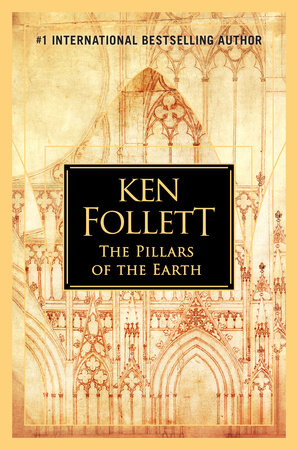
Ken Follett stokes the flames of his Kingsbridge chronicles with A Column of Fire

One of the best literary surprises of the season has been getting a new chapter in what might rightfully be called the Kingsbridge Chronicles with Ken Follett's latest release, A Column of Fire.

This is the second sequel to Follett's epic novel,The Pillars of the Earth, which became a big bestseller long before it was chosen as an Oprah Book Club selection,not to mention a miniseries on Starz. The second book,World Without End, was also adapted into a made for cable miniseries and with any luck, this one will join them as well.

I've been reading ACOF,slowly but surely(it is a lengthy book,after all) and have been pleased to find that much like the earlier novels, there is plenty to savor and a trio of solid themes that link from one point in time to another:

THE CATHEDRAL: That particular religious building is at the hub of these books, from the beginning where plans to build it consumed most of the characters to the second book,where a partial collapse and the spread of a major diease caused major changes to how the cathedral was used.

In the current novel, the cathedral has been partly underused,due to Henry the VIII's reign and several of the abandoned parts of the building were pledged as collateral for a loan made by Alicia Willard, with hopes that she and her sons Ned and Barney could turn them into a viable marketplace for all of the local merchants to prosper with.

Unfortunately, that deal was broken by the Fitzgerald family(with help from the current bishop) and the Willards have no choice but to find another way to make their fortune,particularly Ned. Time and again, the cathedral has played a vital part in the fate of others and forced many characters to chose between it and their true desires:


FORBIDDEN ROMANCE: Lovers pulled apart by circumstance and social status are key elements in these books, such as Jack Builder and Lady Aliena from TPOTE, and the legacy of WWOE's Merthin and Caris leaves quite a mark for the current romantic couple to stand in.

Much like Caris, Margery Fitzgerald is being forced to marry a local noble man by her social climbing family,including her ambitious brother Rollo. While she would infinitely prefer to be with Ned Willard,who has been deeply in love with her for years, pressure from both her relatives and religion induce her to accept this unwanted engagement.

Will Ned and Margery find a way to be together, despite their changing fortunes and the matters of faith that divide them? Well, we shall see but if past performance is any indication, I think that true love will win out, one way or another:


TURNING POINT IN HISTORY: In each Kingsbridge novel, a pivotal moment in English history is set within the background of the overall story like the death at sea of King Henry I's heir in TPOTE and in World Without End, the fate of overthrowen King Edward II proves to be crucial.

In ACOF, the reign of "Bloody" Mary Tudor is near it's end, causing the once downtrodden Catholics to take harsh revenge against their formerly in power Protestant neighbors. When it becomes clear that Princess Elizabeth has the best chance to take the throne upon her sister's death, many quickly take sides both for and against her.

With his family fortunes spiraling downward, Ned Willard takes up an offer to join forces with Sir William Cecil(and late Francis Walshingham) as protectors of Elizabeth, who must fight against the Catholic forces aligned against her. That doesn't hold well with Margery, as her faith is what lead her to marry against her wishes yet she still holds firm to her beliefs.

The clash of religions in this time period did have a widespread effect that is keenly felt among the characters in ACOF and as Follett also gives us insight into some of the more regal players here, that perspective will be fully enhanced for all involved,including the reader:


With things as they are today, it's good to have a bit of history or historical fiction to look to for some comfort in that hard times can and will be dealt with for the better in the end. I know that the Kingsbridge novels are ultimately meant to be entertainment and yes, they are thumping good reads indeed.

However, in this day and age of prevalent uncertainty, something like a grand epic story from a steadfast storyteller such as Ken Follett does offer a good bit of relief and good reading in a weary world:


Tuesday, October 03, 2017

Turning back time with page turners new and old

In times like these,when tragic events seem to strike at just about every moment, it can be hard to find solace for our troubles. One of the many places that people look to for emotional inspiration are books and not just for pop culture escape.

A good novel can give us a glimpse of what it was like for others back in the day and how the average person dealt with day-to-adversity as well as anxiety about the state of the world. That book doesn't have to recently written but a new story can take us back to a few older ones along the same line as I will attempt to show here.

 Recently released into paperback, Jennifer Ryan's The Chilbury Ladies' Choir is set in the title English village as WWII begins and with many of the local men called to military service, the church choir prepares to be disbanded. However, the women of Chilbury(lead by a female music professor) see no reason to give up their weekly worship via song and soon form an all-ladies' choir.

Their stories are told through journals and letters, like Mrs. Trilling, a widow who takes in an unmarried colonel while her son is fighting overseas, Miss Paltry, a midwife with limited scruples and secrets to keep and Venetia, whose romance with a newly arrived artist leads to more trouble than anyone expected.

As the war goes on, the women and girls of Chilbury learn to handle the hard times at hand as well as prepare for what may come, by sharing their hopes and sorrows as well as keeping a song in their hearts. Author Jennifer Ryan did a fair amount of research into what those days were like for folks back then and her blend of history and heart serves the reader well:


The Chilbury Ladies' Choir is putting many favorably in mind of The Guernsey Literary and Potato Peel Pie Society, which came out in 2008 and was co-written by Annie Barrows and the late Mary Ann Shaffer.

That novel also involved letters, as newspaper writer Juliet learns more than she intended to about the life and times of the island folk during their time of German occupation during the war.

From a request to find the works of Charles Lamb comes insight and intimacy from correspondence with the resourceful members of the "book group"(formed partly to cover up local gatherings to share the merger food supplies they manage to save from the invading forces at their doorstep) and their erstwhile leader Elizabeth, a plucky soul whose heart was in the right place even when she loved someone from the wrong side of the war.

The book is being adapted into a movie as we speak, with Lily James and Jessica Brown Findlay cast as Juliet and Elizabeth, a good sign indeed. With the film possibly being ready as soon as next year, it might be high time to reread this lovely tale of steadfast folk or discover the joys of it for the first time:


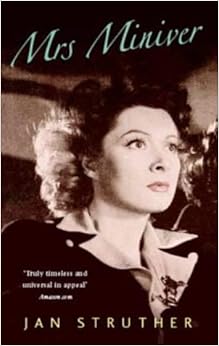
A book and film that I feel truly paved the way for both of these novels(and a good deal more) is Mrs. Miniver. Based upon a series of articles written by Jan Struther,  this fictional yet all too real leading lady represented the small town charms and standards that defined the English resolve to fight in WWII.

The book was published in 1939, with the Hollywood version following in 1942 and both are credited with gaining American sympathies towards joining the war. It didn't hurt that Jan Struther went on a strong lecture tour in the US for the book, not to mention that the movie won six Oscars.

Mrs. Miniver,however, wasn't just a piece of propaganda. It gave a human face to those over in England and elsewhere who did their best to stay true to their better selves during a time of ever increasing crisis. It also showed how even the most casual kindness to others can make a huge difference to even a small corner of the world:


So, as we move on to make sense out of the senselessness around us, it always helps to have a good book or two(or perhaps three!) to help us along the way. Looking back at those struggles in the past,even through fiction, and seeing how people cope then should offer us hope that we,too, can get through this together in the here and now.

Going back in time does have it's disadvantages, as numerous sci-fi stories and even the Outlander book and TV series show us. Sure, meeting a handsome Highlander sounds great but plenty of real world obstacles were thrown in that path to true love there. Perhaps it's best that we don't have any time machines or mystical portals to pass through as it may be best to take such a journey from the comfort of our couches:

Friday, September 29, 2017

Reading War and Peace in hopes of world peace

Part of my reading schedule includes what I call my "Morning Read", a book to help me start the day off right. It's also a good way for me to catch up on those classics that you always mean to get to but never seem to find the time for.

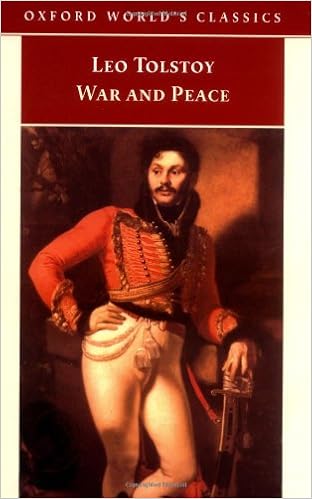
One of the major books on that latter list is War and Peace by Leo Tolstoy, a book that most of my generation was introduced to as that last minute book report read that Charlie Brown had to finish up on New Year's Eve. Along with Anna Karenina, W&P is the title that comes to mind when anyone makes a joke about starting long Russian novels.

I happen to love long novels, classics and contemporary alike. Just in my Morning Reads alone, lengthy page turners such as Moby Dick, Vanity Fair and Les Miserables have been able to escape my TBR piles and find a place on my classic books shelves.

However, W&P presents quite a challenge, as it has dozens of subplots, a multitude of characters and a plethora of passages describing the intricate details of military action. In other words, it's the ultimate saga story.

I'm only two hundred and fifty pages in at this point yet I've already encountered the war portion of the story as the Russian forces battle against the invading armies of Napoleon Bonaparte. You do feel as if you're walking beside the soldiers, older men with their own ideas about what will happen and younger ones eager for action yet not sure of themselves when push comes to serious shove.

Tolstoy does paint the elaborate picture as various troops and officers go between moments of tedium and intense attacks, causing more than one soldier to become bewildered and lose his way during the firefight frenzy:


Meanwhile, there's a good deal of "peace" right from the beginning as social encounters at a party lead to several intrigues and potential romances.

As in any polite society, you have a good amount of manipulators with the likes of Princess Anna Mihalovna scheming to get her son Boris as much status as she can to Prince Vassily(a lot of prince and princess titles are attached to numerous characters here), whose quiet yet powerful influence is felt among his peers.

To balance them out, you have kinder folk such as Pierre, who is surprised to find himself as the heir to the family estate that barely acknowledged him as a bastard son and Princess Mary, the meek and mild daughter of the bullying Prince Bolkonsky(so can't stand him!) who thinks nothing of belittling her in order to secure his own comfort.

 He's not that much more civil to anyone else in his social circle,or outside it for that matter, but I still feel for Princess Mary, as she sadly gives up a chance at marriage,due partly to her father's fierce nature but also the feckless nature of her potential fiance. There are more glamorous types in this story such as the captivating Natasha, but my eye will be on Princess Mary as things roll on here:


 My choice of translation was the Maude, as in Aylmer and Louise Maude who were friends of Tolstoy and given his seal of approval for his works. My reason for choosing this particular translations comes from a far shorter book than W&P yet it plays a pivotal part in the bookish lives of it's authors.

Used and Rare by Lawrence and Nancy Goldstone is the first in a trilogy by this husband and wife team about their adventures in the book collecting world. They were dedicated readers to start with but it was a search for W&P that lead them to the realm of first editions and collectable tomes.

As part of a friendly birthday competition, Nancy sought out a stylish yet affordable hardcover edition of the book and after a few dead ends, came across a lovely copy(complete with maps) in her price range that won her the bet. That copy,which pleased Lawrence so much and got the two of them more interested in this area of books, was a Maude and I'm happy to report that it's a very engaging translation indeed.

Granted, my copy is a big thick Oxford Classics paperback but it's in good shape with proper print size(vitally important for incredibly long books) and that's all I need. I do have an edition of Anna Karenina but Constance Garnett is the translator and her take on the prose just doesn't work for me. I might have to find the Maude for that or maybe the more modern one chosen for Oprah's book club a few years back. Finding the right translation does make the difference, I've found:


So, why War and Peace and why now? Well, it's not just for the bragging rights,although I have had this big boy on my Must Read Classics shelf for a good long while.

W&P is one of those literary mountains that you do want to climb simply because it's there but that isn't my main motivation here. I chose to read this book at this time as an act of offbeat optimism.

I'm not about to get into politics here but more than likely, anyone reading this is well aware of the state of things in this country and elsewhere. Plenty of tension, infighting, natural disasters and threat of another major world war looms over our heads a lot closer than they used, it seems.

Like most folks, I get riled up at what's going on and do what I can, yet it can get overwhelming at times,especially since it's hard to know who to talk to about all of this. While I have some family and friends(online and off) that I can share my thoughts with, the increasing amount of vitriol that pops up  during every other social media discussion makes speaking freely feel harder than it should be.

So, to have a positive focus to my outlook these days, I chose to read War and Peace as a sign of hope that the world at large will remain intact long enough for me to finish this book. A weird reason, maybe, but I think a good one. Tolstoy meant for W&P to be a lesson in history more than a novel and so far, it's been rather enlightening to say the least.

 By the time I do finish the book, the world will hopefully be in a better place than we are at the moment. I don't expect actual world peace,of course, but I do hope that we all gain some perspective from this moment in history and with any luck, a writer as good as Tolstoy will be around to tell our story for future generations to come:


Monday, September 25, 2017

My Series-ous Reading opens the door for Jane and the Stillroom Maid

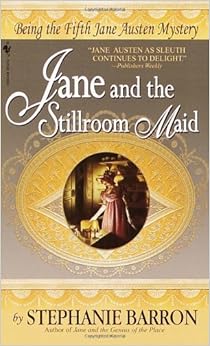
In my quest to catch up with certain book series such as Stephanie Barron's Jane Austen Mysteries, this bout of Series-ous Reading has given me an extra bonus in increasing my delight in all things Jane Austen.

One of the joys of reading Barron's fifth entry, Jane and the Stillroom Maid, has been spotting the various Pride and Prejudice influences, starting with the setting of the story which is in Derbyshire. As many a P&P fan knows, that section of England is the fictional home of Mr. Darcy, the rather proud owner of Pemberley and the house that inspired that grand place is also included here.

Before we get to that, the novel sends us off with Jane,her sister Cassandra and their widowed mother(whose nerves are very Mrs. Bennet-like) on a trip through Derbyshire with their cousin Rev. Cooper, a man fond of singing hymns and extolling the virtues of his noble patron, Sir George Mumps. A more Mr. Collins type of fellow could not be found,indeed:


When Jane joins in on a fishing trip with Mr. Cooper and a local friend of his, solicitor George Hemmings, she happens upon the dead body of what appears to be a young man.

As it turns out, the deceased is a young woman dressed up in gentleman's clothes by the name of Tess Arnold. Tess was the stillroom maid(as well as the neighborhood medicine woman) at Penfolds Hall and recently dismissed from her position due to a possible affair with Andrew Danforth, the younger brother of the family.

Tess' death is strange enough but there are suspicions aroused by the local coroner Michael Tivey, about the Freemasons being involved in the crime, many of whom are prominent members of the community,including Charles Danforth, the current master of Pendfolds whose wife and children died under mysterious circumstances in which Tess might be brought to blame.

To make matters worse, George Hemmings disappears from the area,despite being a key witness to the discovery of Tess' remains and quite a scene is created at the inquest,where Jane does testify, that throws everything into an uproar:


A calming force amidst the chaos is the arrival of Sir Harold Trowbridge, Jane's "Gentleman Rogue" who is eager to clear the Freemasons of any blame as well as assist in finding the true killer.

 That search for justice takes Jane and Lord Harold to Chatsworth House,which was the architectural muse for Pemberley, and connections are made with the family of the recently deceased Georgiana, the famed Duchess of Devonshire.

While Jane's mother is not happy about her youngest daughter's crime solving ways(or the Whig Party ties that Chatsworth has), she is hoping for Jane to make a match with Lord Harold, something that Jane does briefly entertain the notion of but knows full well that, unlike her new set of noble acquaintances, such a thing is not to be:


Despite these romantic thoughts, Jane is able to focus on the task at hand which becomes all the more pressing when a confession to the crime is made by someone she suspects is truly innocent.

I have to say that pace of this book is  much livelier than the previous installment in this series(Jane and the Genius of the Place), with a good amount of humor,both verbal and otherwise-let's just say that Austen women know how to defend themselves with crockery!

Lines from Pride and Prejudice are cleverly woven into several conversations throughout the course of the story, adding a nice nuance without being too distracting from the main plot. Plus, the addition of real life figures,such as Lady Harriot Cavendish and Elizabeth "Bess" Foster, as supporting players enriched the historical elements of the story just right.

All in all, I found Jane and the Stillroom Maid to be a fine read and now that I've read the first five books in this series(along with a couple of later ones as well), that I will keep up with the rest of Stephanie Barron's books.

As for my next Series-ous Reading selection, it'll be doing double duty as The Mark of the Midnight Manzanilla by Lauren Willig is also on my TBR for the FrightFall readathon next month.

The reason for this is due to the vampire theme of the story, as the heroine of the story, Sally Fitzhugh, is influenced by a popular novel that has a nocturnal Romeo at it's center. Sort of sounds like a Regency version of Twilight but more than likely, the book in question has more in common with the kind of "horrid" books that Catherine Morland from Northanger Abbey preferred to swoon over, we shall see!:


Friday, September 22, 2017

Banned Books Week 2017:Stephen King Edition

Once again, readers everywhere are taking the time to celebrate our literary freedom with Banned Books Week, which runs from September 24 to the 30th, and hosts a variety of activities, including a Twitter tournament for "rebel readers."

As a former indie bookseller and a lifelong reader, I feel the need to take special note of this event(particularly in the harsh times we're living in these days) and highlight the need to read freely without fear of censorship.

For my focus this year, I decided to look at a trio of often banned books by our modern day master of fear,Stephen King. His works have been on many a list of challenged titles yet his popularity as a writer has grown stronger over the years.

When you mention that a Stephen King book has been banned or pulled, most folks would be quick to say "Well, he does write those scary books, with the bad language and violence there. What do you expect?"

For one, I expect the truth about why his books are often targeted. Yes, he does use "adult" language and even his non-supernatural works have elements of violence within them. However, in thinking over the reasons given by most of the eager book banners out there, I have my doubts regarding their usual "community standards" and "we must protect the children" themes.

 Let's start with Carrie, King's first published novel and one of his most iconic books. This tale of a mistreated teen girl has had it's share of real world bullies for decades, to the point of earning a spot on the American Library Association's list of 100 Most Frequently Challenged Books back in 2000.

Among the reasons cited(language,sexuality,overall content) by censors, a major accusation is that the book is "anti-Christian" or promotes Satanism. Neither is true, as the major religious figure in the book, Carrie's mother Margaret, is actually an abuser of the very faith she claims to have.

Margaret uses her religious beliefs(which are mostly taken from several different sources) to give herself a sense of authority and control, particular over her daughter, who is rather isolated from society and despairing of ever being part of it.

 When Carrie starts to gain control over her psychic powers and realizes that this could be leverage against her mother's determination to keep her down, the shift in power between the two of them is intense, to say the least.

If you read those scenes and imagine them without Carrie's telekinesis, you can see that at the heart of them is a breaking away from parental authority and trying to gain emotional independence, which I think is the real reason that some of these folks want to keep Carrie away from their kids.

Some of them might even see a bit of Margaret White in themselves and prefer to blame the messenger instead of looking within themselves there:


Another King book that often gets puts on the censorship chopping block is Cujo, a novel that even the author admits is a very grim one there. The story of a trapped mother and child fighting off a rabid St. Bernard is a harrowing experience, to say the least.

Even the film version gave the story a slightly happier ending and King had no problem with that( and as we well know, the man is far from shy when it comes to making his opinion known in that department).

Yet, when it comes to objections from banners, their biggest complaint is based on sex-Donna, the main character, has an adulterous affair that is briefly touched on but not really the point of the story here. When people think of Cujo, they think "big scary dog", not Donna's love life! Sure, they complain about the cursing,too, but not a word against the real heavy horrors in the book.

That avoidance is what I truly believe is the real issue for these people; the all-too-real fear of being in a dangerous situation where you can't protect your child from harm. Granted, it's understandable to not want to think about something like that but not a good reason to prevent others from reading this or any other book. What they're truly mad at King about is for bringing them a horror that hits too close to home:


Oddly enough, sexual content is often cited for Christine, King's killer car book that I reread over a year ago and I honestly don't recall any major sex scenes in the book(or the movie, for that matter).

Yes, troubled teen Arnie does try to get very intimate with his new girlfriend Leigh yet there is another romantic rival in their way and she happens to have four wheels. Not even Arnie's pal Dennis has a big league love interest at first so it must be the dark devotion between Arnie and Christine that has those censors burning rubber to ban the book.

It's no secret that society has a wink and a nod approach to how certain people(mostly men) have an intense love for their vehicles, with jokes about wives and girlfriends being "the other woman" in that relationship. It's a common enough trope that just about every sitcom I've ever seen has resorted to it as an easy go-to for a couple to fight about.

 King takes that taken for granted notion to a very scary place, which probably irks a lot of people who don't know exactly why but it grinds their gears the wrong way nonetheless. Instead of dealing with that in a mature manner, folks prefer to park that particular car in a locked up garage, which won't fix that problem as magically as Christine repairs herself:


Sadly, I think it's safe to say that Stephen King's works will still be the target of censorship for many more years to come.

However, that dubious honor also comes with a blessing that many writers would envy; generations of readers who will keep on reading his books and encouraging others to fight the good fight for the freedom to read.

And finally, to those who insist that King's work are bad for children-while I do agree about age appropriateness,  there is no sweeping generalization that justifies hiding the young from finding that the world can be a scary place at times. Books like Stephen King's can actually help them deal with those fears and learn to make proper sense of things, a skill that is badly needed right now,as we have daily proof of:


Thursday, September 21, 2017

Perusing some Paperbacks From Hell at the Movie Trailer Park

One of the delights of this season for me has been taking my sweet time with Grady Hendrix's Paperbacks From Hell, a twisted yet loving tribute to horror novels of the 1970s and 80s. Sort of like making your Halloween candy last as long as possible.

Assisted by Will Errickson, this gorgeously glossy book does more than showcase the sinister cover art of these cheesy chillers, it also highlights the various artists, gives a rundown of many an author's canon and details the ever changing trends in society that often issued new waves of gruesomely great books.

In facts, several of the horror trends were brought about by popular movies such as The Exorcist, The Amityville Horror and The Omen, with plenty of B-movies also being adapted to big and small screen alike,thanks to these pulpy paperback delights. Here are a handful of some of these hellish paperbacks being given their shot at sinister silver screen stardom:

THE KEEP: F. Paul Wilson's 1981 novel was the first in a series of six books known as the Adversary Circle. The 1983 film version wound up having a lot of adversaries at the studio, due to various cuts of the movie being done against director Michael Mann's wishes.

The author's disappointment matched the critics, who found the movie confusing at best. However, this story of the title building in WWII Romania holding something even more threatening than the Nazi forces occupying the area has a cult following, with fans hoping for a restored cut on home video at some point.

 So far, no progress on that point but The Keep and Wilson's other books in the series have been turned into graphic novels, giving readers some visuals yet without a cool Tangerine Dream soundtrack to go with them:


HARVEST HOME: Thomas Tryon was one of those writers who managed to latch onto the incoming tone of new horror, as his previous book The Other clicked with the Rosemary's Baby/The Omen inspired flock of fearful fiction in the 70s.

When big city folks started to flee to the seemingly safer suburbs and country side, he gave them a solid dose of buyer's remorse with Harvest Home in 1973, which became a TV miniseries(entitled The Dark Secret of Harvest Home) by 1978.

How a story like this, with blood sacrifices and "corn fertility" rituals , was able to be put on the air back then is beyond me,especially since the series stayed pretty true to the source material. Then again, it did have Bette Davis in the cast, which probably made the network and the censors feel better about the whole thing:


ORCA: Thanks to Jaws,both book and film, the demand for scary creatures from the sea was ripe indeed and Arthur Herzog caught quite the big killer fish with Orca in 1977, with the movie adaptation coming out only a year later.

Most of the critics felt it was a weak imitation of Jaws, which hurt the film at the box office yet it has a strong following due to it's "when nature attacks!" theme. Herzog was no stranger to that genre, as his 1974 killer bee novel The Swarm gave us one of the best worst movies of all time.

Unlike The Swarm in 1978, Orca didn't receive any Oscar nominations yet it was praised for the soundtrack provided by Ennico Morricone. Amazing how some of the worst films out there have good music attached to them:


 THE FURY: Psychic kids became all the rage after the success of Stephen King's Carrie and John Farris gave readers two for the price of one with this 1976 chiller that just happened to be made into a film two years later directed by Brian De Palma, best known for his cinematic take on Carrie.

However, this wasn't turned into a Carrie clone, partly due to having Farris adapt his own book to screen. The movie actually got some excellent critical reviews and audiences to this day still enjoy the movie.

I've seen it a couple of times and it really is a fun ride worth taking. I haven't read the book but who knows, I might give it a try someday. Fortunately, there is no talk of a remake and no need for one(which never stops anyone<I know, but hope springs eternal):


There are plenty of other devious delights to be found within the pages of Paperbacks From Hell, including books that haven't been made into weirdly entertaining movies. However, you can find some good viewing suggestions for Halloween night here and maybe a bizarre book club recommendation as well.

For fans of old school horror as well as those interested in learning more about this particular time period of pop culture, Paperbacks From Hell is your glowing green Golden Ticket to terror. I'm quite sure that many other reviewers will agree while I slowly nibble on each evilly delicious entry...:


Monday, September 18, 2017

The long and short of book awards in 2017

Now that we've finished up with the Emmys(congrats to the folks involved with Big Little Lies and The Handmaid's Tale for their wins), the next major pop culture award show speculation is all about books,..well,for some of us at least.

The long lists of nominees for The National Book Award were released last week, with the finalists due to be announced on October 4 and the winners to be celebrated on November 17.

As much as I appreciate all four of the categories,which include non-fiction and young adult, my focal point here is on fiction and I was so thrilled to see a book chosen that not only had I recently finished to be on that list, it's also one of the best novels that I have read this year.

Pachinko is the second novel written by Min Jin Lee, who took several years to work on the book in order to get the emotional nuances of the story right.

Part of that research included living in Japan and looking deeper into the cultural history between Korea and Japan, which is at the heart of this multi-generational tale. It begins in Korea, where Sunja, a young girl from a poor yet loving family, falls in love with Hansu, a much older man who neglects to tell her about his wife and children.

When she becomes pregnant, Sunja refuses to live as Hansu's mistress and her family honor is saved by marrying a kind hearted missionary who moves their new family to Japan on the eve of WWII. As Sunja's children and grandchildren face the hardships and prejudices that society inflicts upon them, that certain secret from the past throws a long shadow over their lives in most unexpected ways.

This is a sad at times yet also beautiful at times story that deals with the conflicts between love and duty, honesty and truth and the desire to stay true to heritage while wanting to belong to the majority in control. It's themes of cultural identity and family love are truly universal and I hope that this is not the only book award that Pachinko is in the serious running for:


I'm quite confident that Pachinko will be in the NBA shortlist, along with Jesmyn Ward's newest book, Sing,Unburied Sing, that is getting high praise from readers and critics alike.

The story is set in modern day Mississippi, where young Jojo and his younger sister Kayla live with their grandparents, Mam, who is dying from cancer and Pop, doing his best to take care of the household as well as raise his grandchildren right.

Jojo's mother Leonie is in and out of their lives, haunted by the death of her beloved brother and a persistent drug habit. When the father of her children is due to be released from prison,Leonie takes Jojo and Kayla, plus a friend of hers, along for the long ride across the state to be reunited with him. Their journey is fraught with numerous risks, not to mention the possibility of little to be gained by the end of it.

Jesmyn Ward has won the NBA before, for her novel Salvage the Bones, but unlike some award shows, I don't think that will be seen as a reason to set this work aside. In fact, a second win could change the game for her, taking these stories of heartfelt realism from the regular literary circles into a mainstream market with a wider audience for such lyrical yet harsh beauty:


 Meanwhile, the Man Booker Prize in England has announced their short list of fiction nominees, with the awards ceremony set for October 17.

 Over the years, the Man Booker has expanded their horizons for nomination, adding Canada and the US along with a few other countries for consideration. That has allowed for a strong variety of books to be featured and focused on, with a few breakout stars in their midst to be found as well.

One of those stars is Exit West by Mohsin Hamid, set in an unnamed country where erstwhile lovers,Nadia and Saeed, soon find that they have no choice but to flee for their lives.

Their method of transport are specially enpowered doors, placed in random areas that are well protected yet available for a price. Nadia and Saeed land on a Grecian island and are beginning to make a real life for themselves when more and more refugees flood in, causing them to be on the move again and again.

This search for home while the whole world is in chaos is a timely theme that the author engagingly embraces, offering a mix of magic and down to earthiness that makes this book more than just a talking point. It layers the evolving conflict with humanity, something that tends to be lost in the arguments yet is what makes this issue so relevant for fictional and real world folks alike:


Speaking of fictional and real people, George Saunders' Lincoln in the Bardo mixes and matches both in this novel, another big contender for the Man Booker.

The "bardo" of the title refers to a limbo like residence for the dead, a realm that is disturbed as Abraham Lincoln spends one long night at the family crypt to hold a one man vigil for his recently departed son Willie.

As most of the spirits relive their past mistakes in life and fight among themselves, two of them decided to help young Willie move on to the next world. Roger Bevins, who ended his life after a broken off romance, and Hans Vollman, who died by accident just as his new marriage was about to begin, take this responsibility for the young Lincoln on as the father is torn between his grief and responsibilities to the living.

Saunders has showcased his brand of off-beat storytelling before in his many short story collections but based on the reviews that I've seen and heard, this is next level work even for him. In a way, it would be oddly fitting(as well as weird) if a novel about an American president wins a British book award but stranger things have happened,I guess:


Well, I am happy that there is one book in this potential award winning bunch that I've read(and yes, will be rooting for) and I might try to read a couple of others but perhaps not just yet.

My hesitation isn't due to the quality of the work, it's more about dealing with the many books that I have on hand at the moment. One of those current reads will probably add a few new titles to my TBR piles, Books for Living by Will Schwalbe.

Schwalbe talks about a variety of books, ranging from The Girl on the Train to Stuart Little and Reading Lolita in Tehran, that in their own unintentional way taught him about different aspects of life such as trust, friendship and problem solving. The whole point of this book seems to be finding meaning in your reading without trying to make all of your reading meaningful, if that makes sense.

Well, take award winning(or potentially award winning) books for example-many people feel they have to get these books in order to be considered a "serious" reader, since any book up for a major award must be a meaningful read. However, if you don't feel any connection to the story during your reading of it(or find it hard to even get a good start there), there is no meaning to be found for you,especially if your true motive is only to impress others.

Better to try a couple of them out to see if they suit you or challenge you in a way that makes the page turning a pleasure rather than a chore. A book doesn't have to award winning to be a good read but it's a nice bonus when it does: